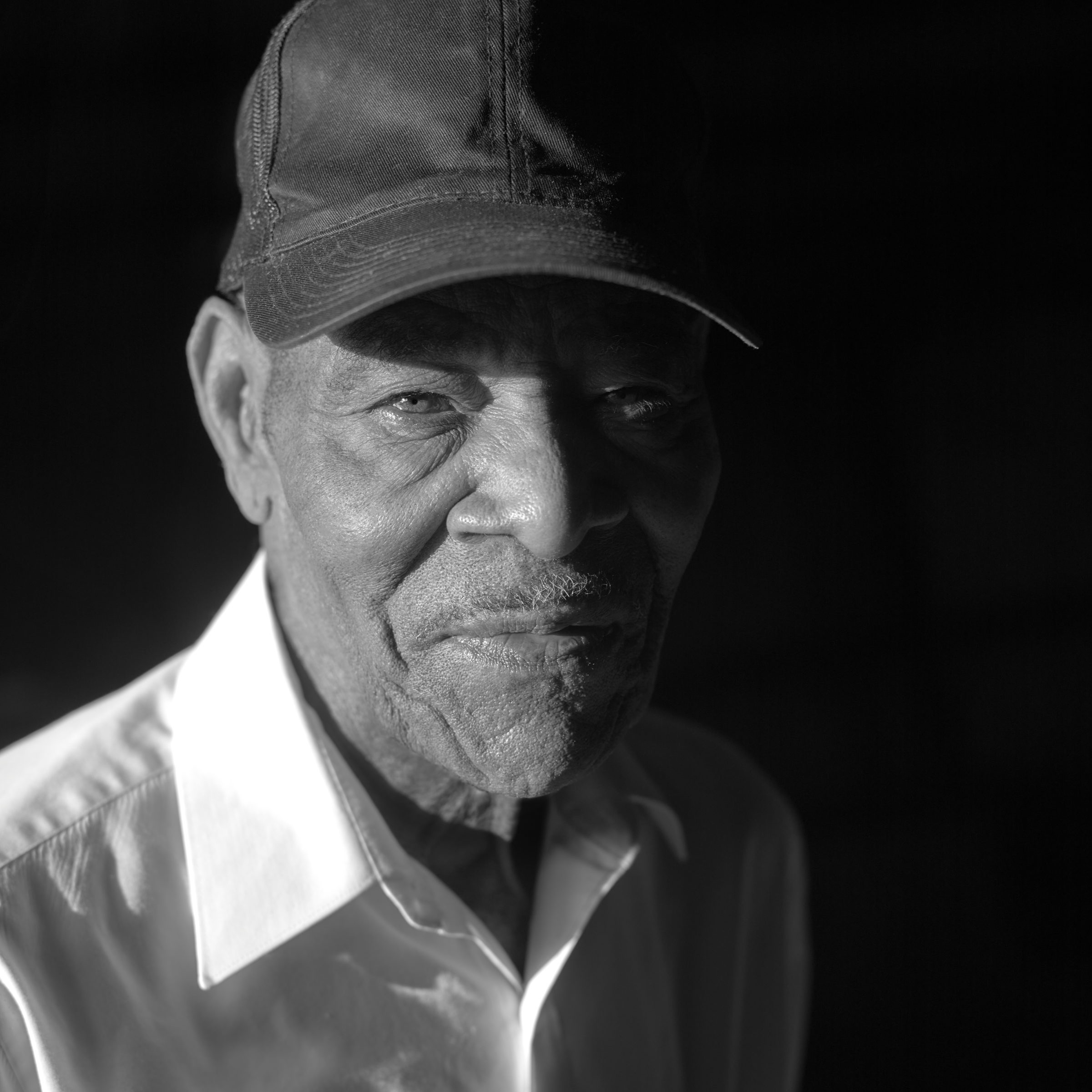
Photograph by Stephen Pitkin/Pitkin Studio
1928 – 2016 · Emelle to McCalla, Alabama
He made art out of what the world threw away.
Tin, steel, rope, carpet, roots and rust — assembled into a record of Black labor, struggle, and survival in the American South. This is the official site of the Estate of Thornton Dial.
35
Works on view
22
Museum collections
8
Publications
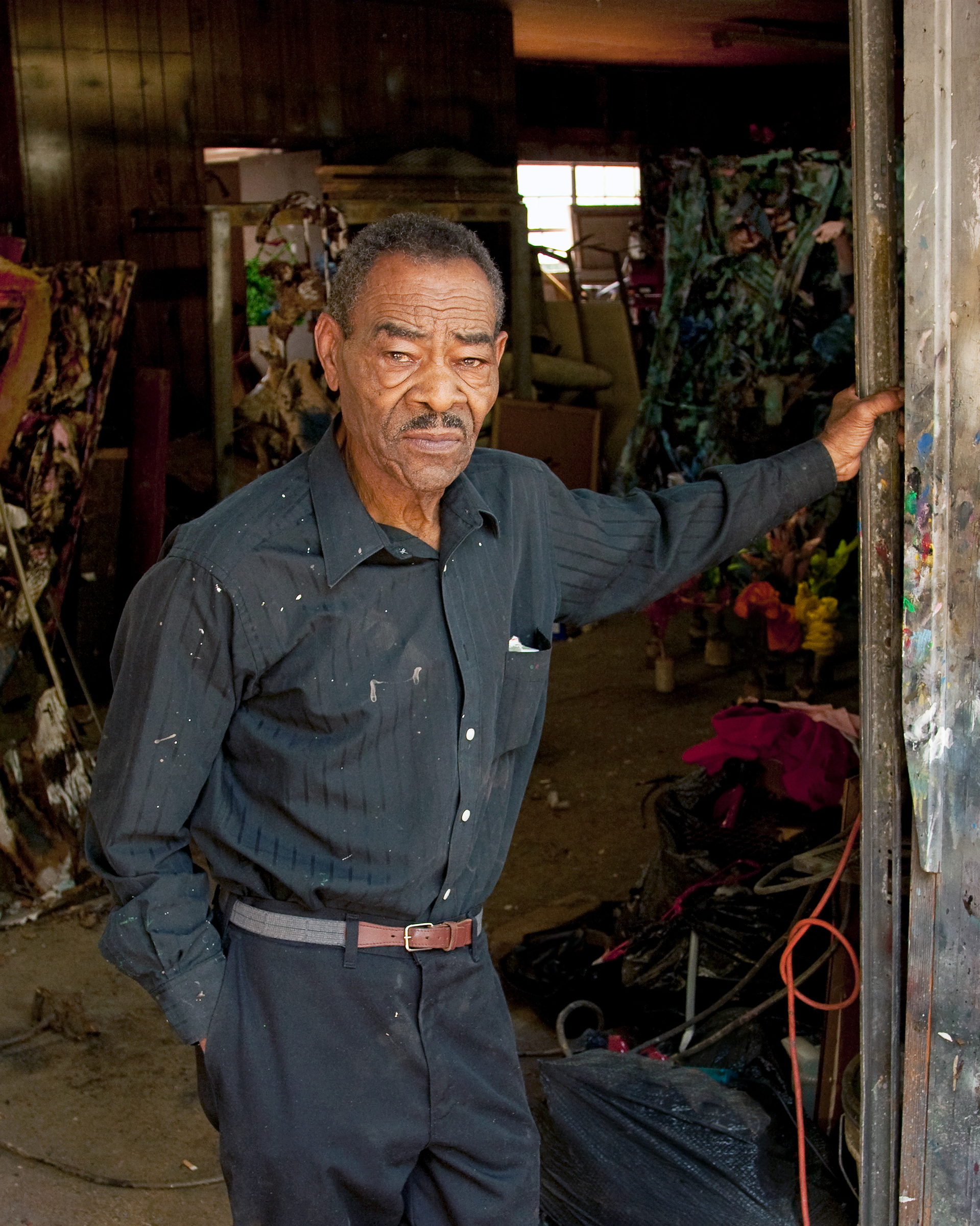
Photograph by Jerry Siegel
His-Story
Born to a sharecropping family in Emelle. Thirty years fabricating railcars at Pullman Standard in Bessemer.
A third-grade education, and a body of work now held by the Metropolitan Museum of Art, the Whitney, the Museum of Modern Art and the High.
Five Decades, Four Kinds of Work
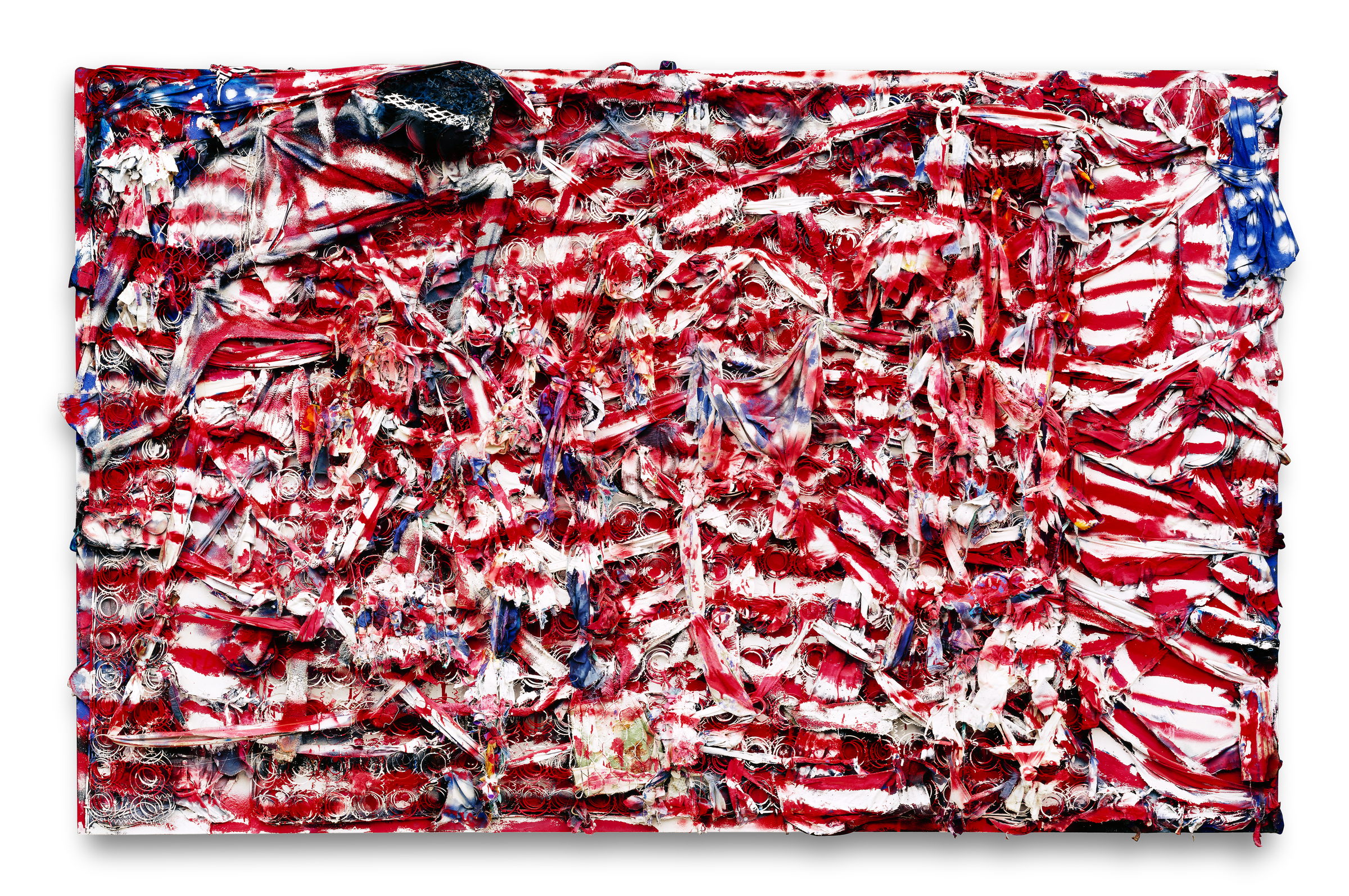
2003
Mattress coils, chicken wire, clothing, can lids, found metal, plastic twine, wire, Splash Zone compound, enamel and spray paint on canvas on wood
71 × 114 × 8 in
Indianapolis Museum of Art at Newfields
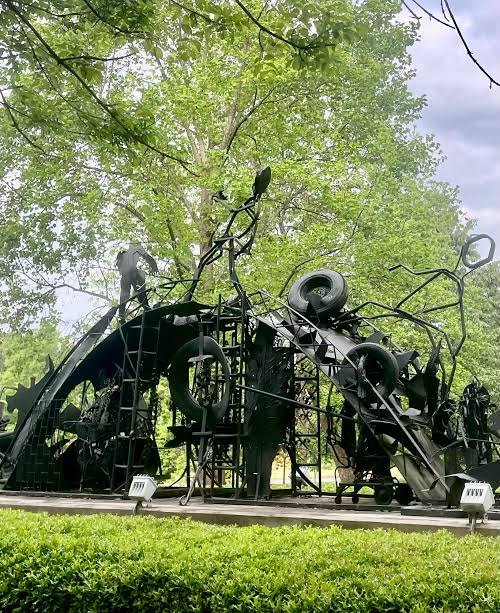
1997
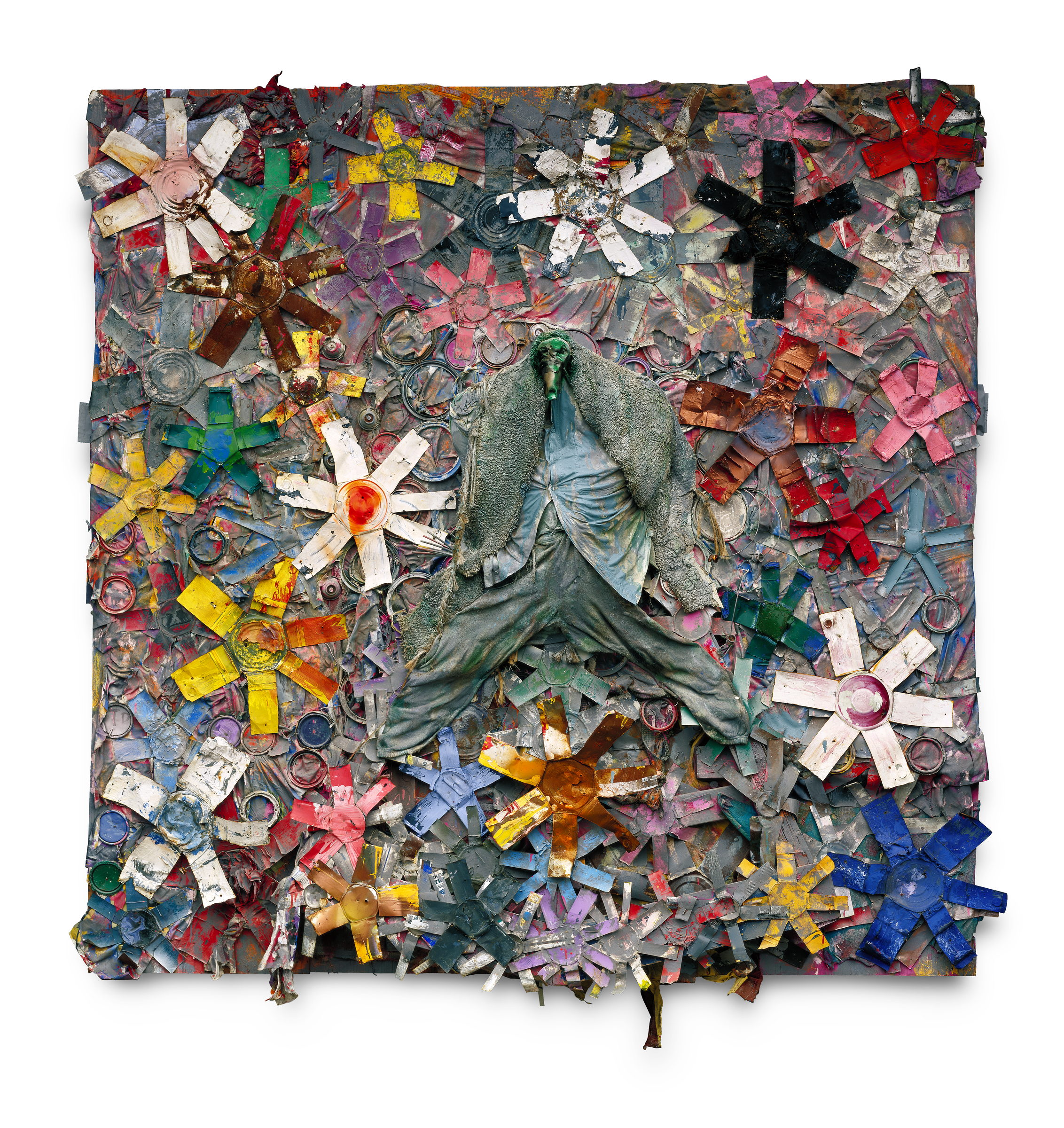
2004
Paint cans, plastic cans, spray paint cans, clothing, wood, steel, carpet, plastic straws, rope, oil, enamel, spray paint and Splash Zone compound on canvas on wood
98 × 101.5 × 20.5 in
Art is a guide for every person who is looking for something.
Thornton Dial
The Art
Swipe or use the arrows. The full gallery lives on the Art page.
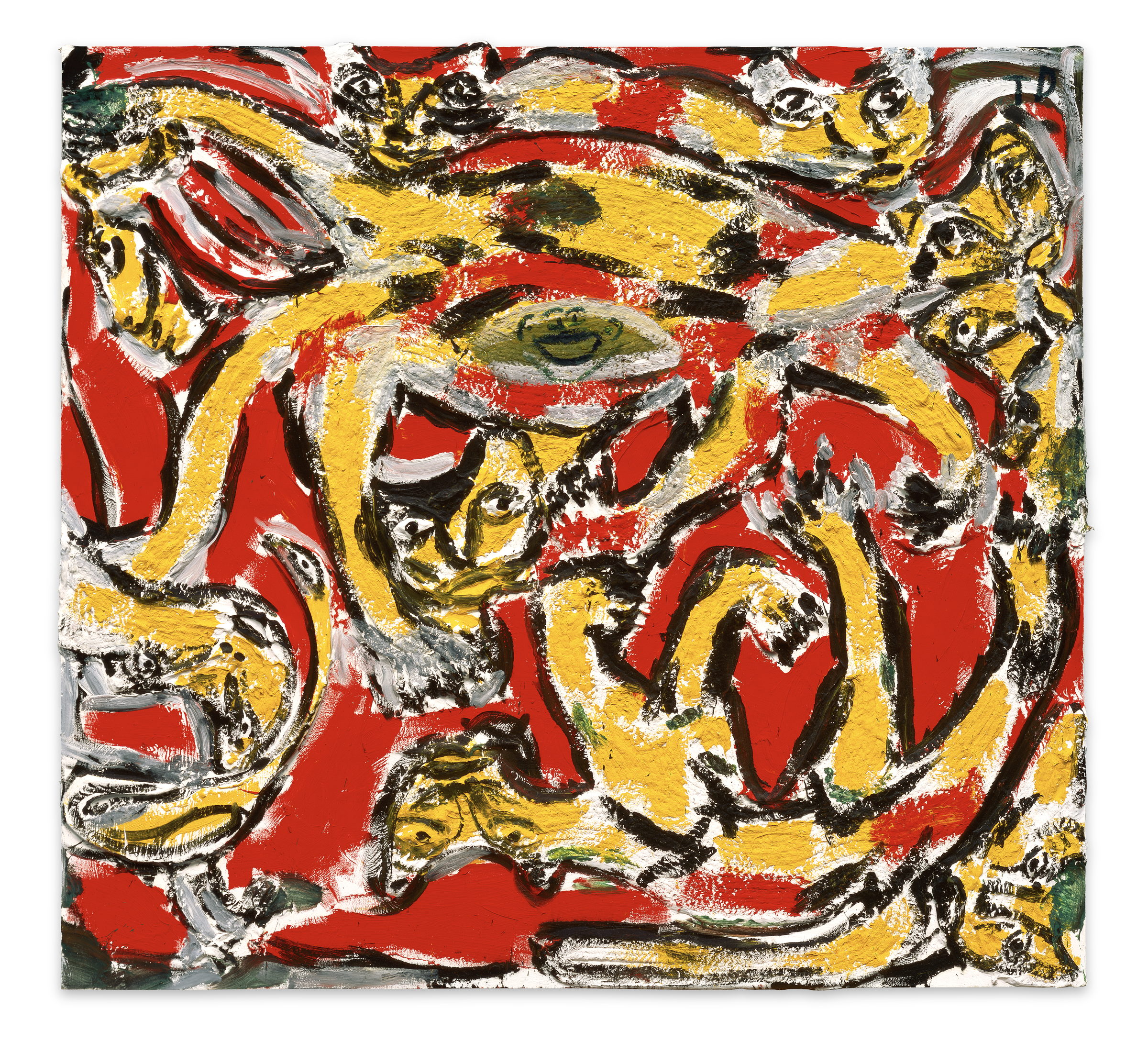
1990
Rope carpet, wood, oil and Splash Zone compound on canvas on wood
69.5 × 76 in
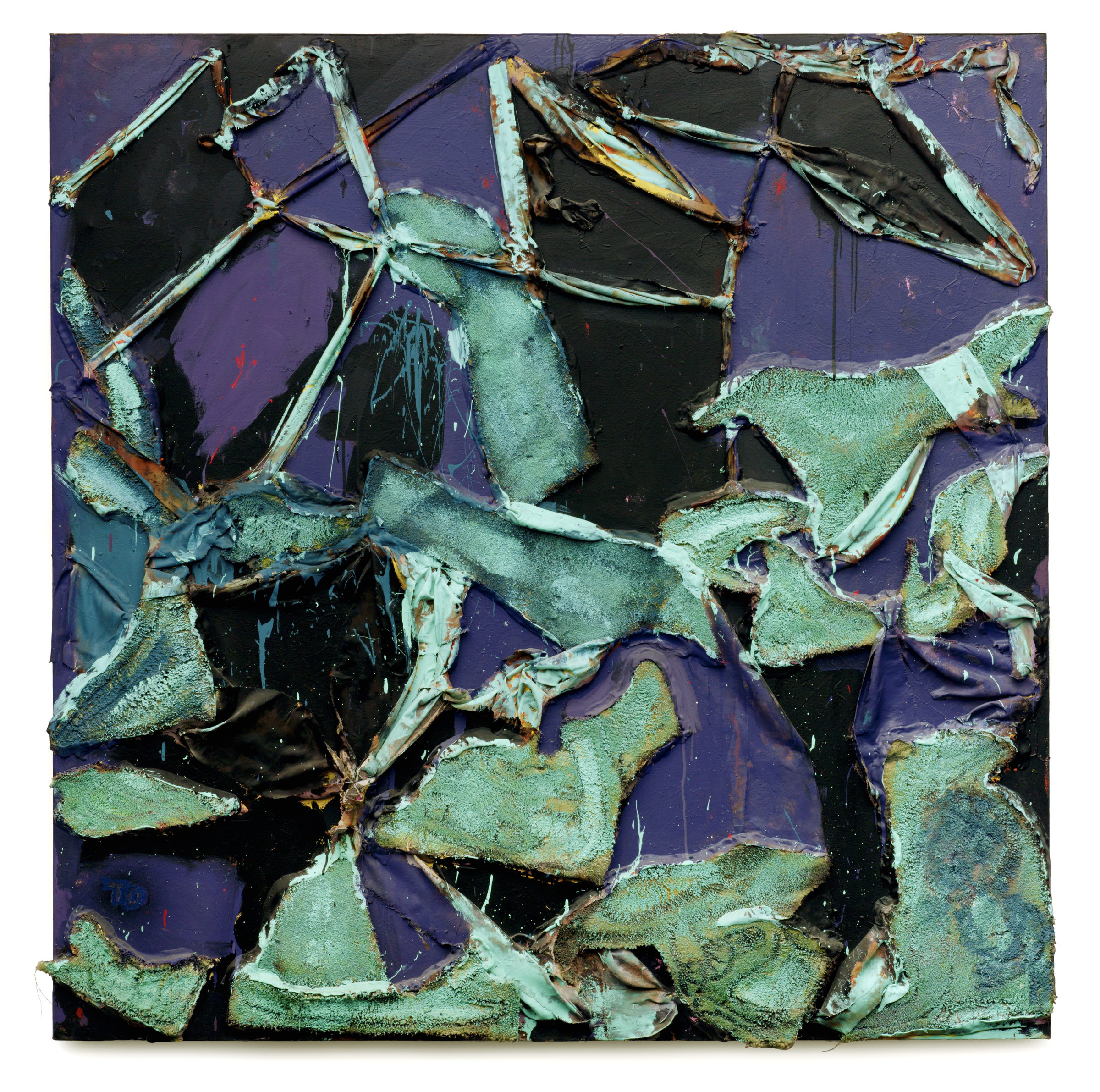
2003
Carpet, cloth, Splash Zone compound, enamel and spray paint on canvas on wood
72.5 × 74 × 3 in
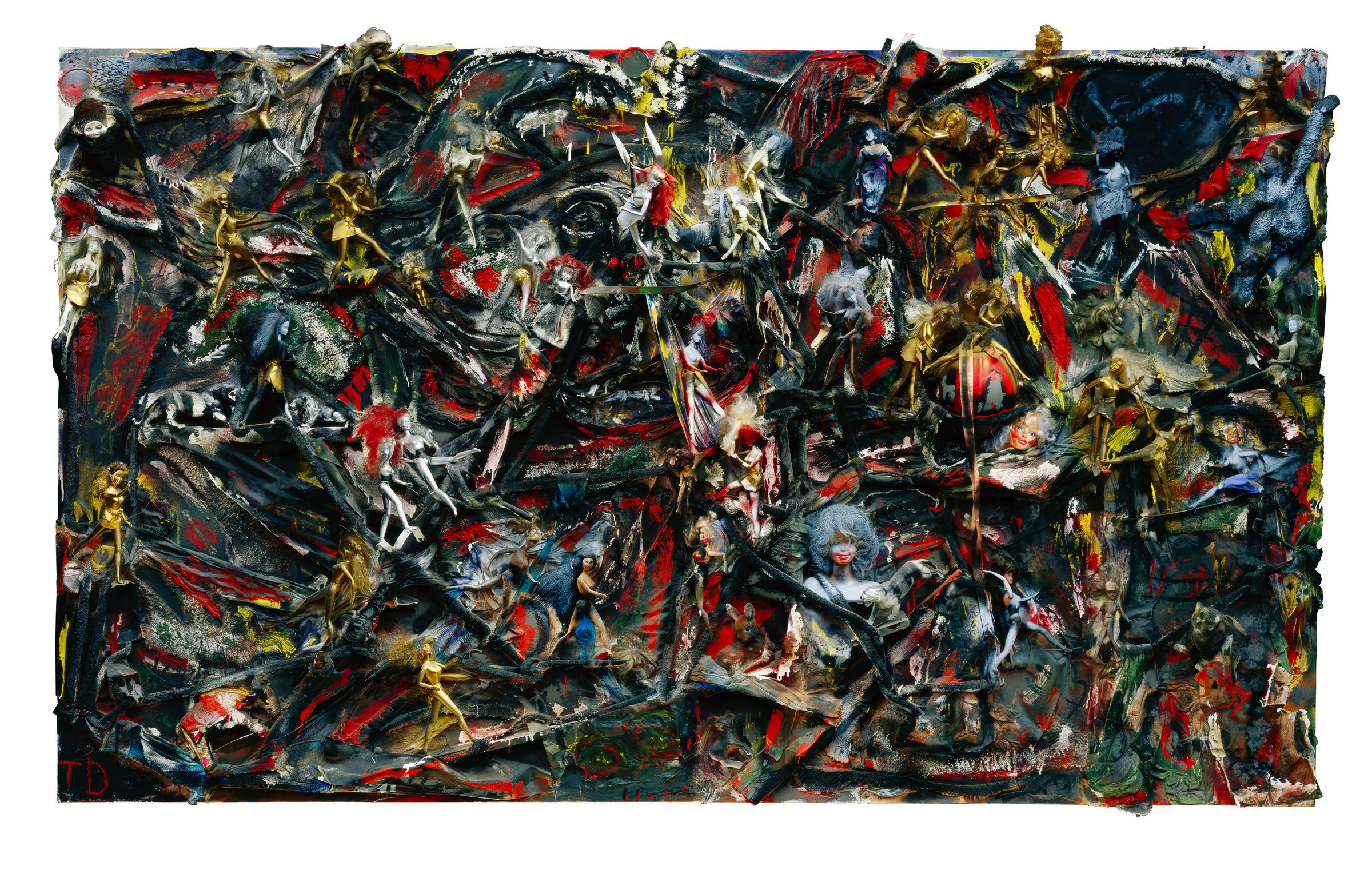
2000
Barbie dolls, stuffed animals, plastic toys, cloth, tin, wood, rope carpet, Splash Zone compound, oil, enamel and spray paint on canvas on wood
75 × 123 × 18 in
1997
2004
Paint cans, plastic cans, spray paint cans, clothing, wood, steel, carpet, plastic straws, rope, oil, enamel, spray paint and Splash Zone compound on canvas on wood
98 × 101.5 × 20.5 in
1992
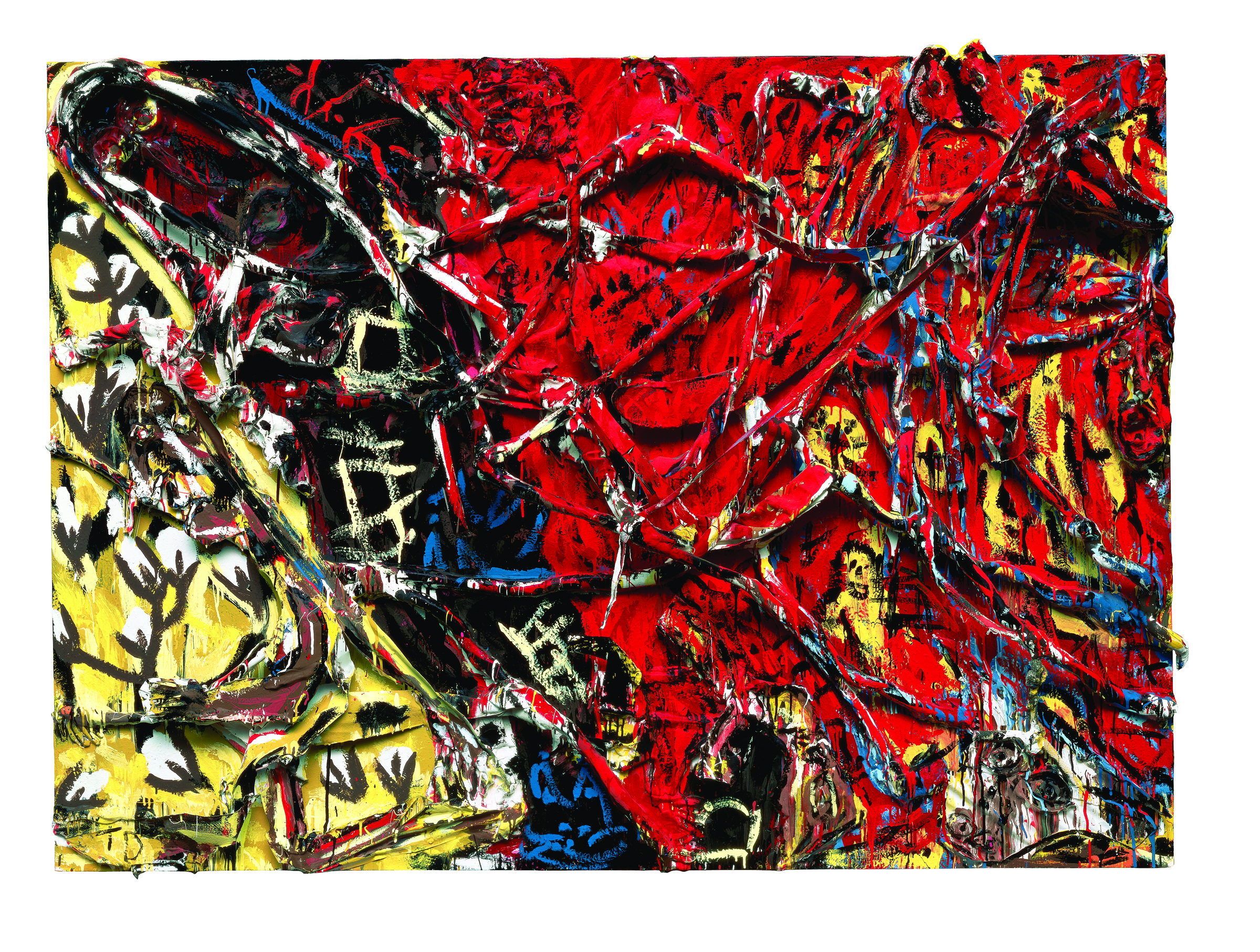
Photograph by Stephen Pitkin/Pitkin Studio
Work of the Month
Heading for the Higher-Paying Jobs
1992
Wood, tin, steel, wire screen, cloth, enamel and Splash Zone compound on canvas on wood
64½ × 90 × 9 in
High Museum of Art, Atlanta
A rotating spotlight — one work, given room, with the story behind the materials. To change it, replace the photograph and edit the five lines here.
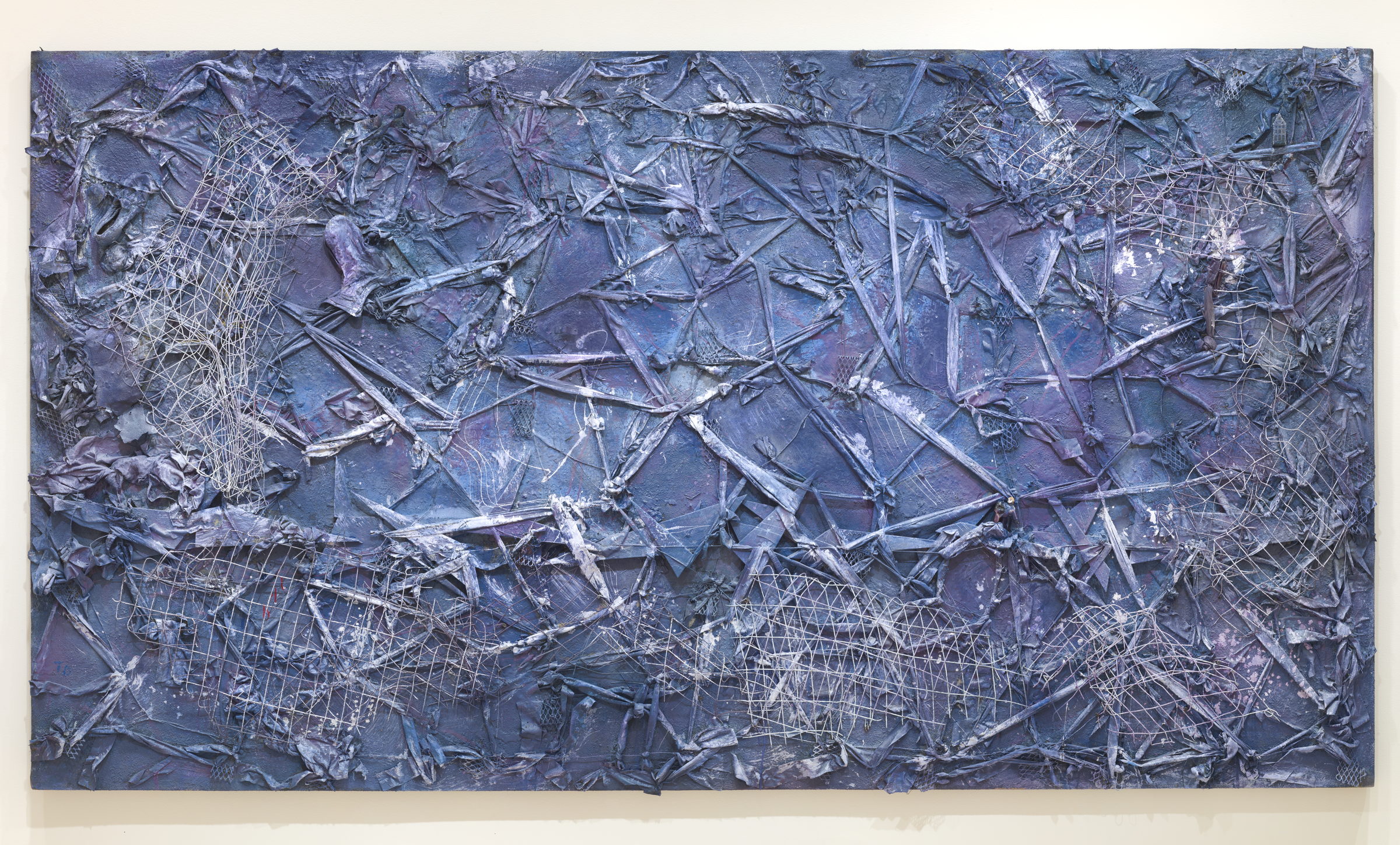
97 × 168 in · 2006–2011
Crossing Waters
Fourteen feet wide, and built the way he built everything: wire fencing, clothing, cloth, wood, corrugated tin, a shoe and ceramic figurines, lashed and layered across canvas over wood, then painted over in a single blue so that the objects stop being objects and become weather. The things caught in it were worn and used by somebody before they were art, and Dial does not disguise that — he floods it, so what you see first is a sea and what you see second is what is in it. Water carries a particular weight in his work: the Middle Passage, the flooding of the Ninth Ward, baptism, the crossing that is escape and the crossing that is drowning, all at once and without a caption telling you which. He made it over five years, from 2006 to 2011, in the years after Katrina. At this size the work is not a picture of a crossing so much as the scale of one.
Photograph by Stephen Pitkin/Pitkin Studio
In His Own Words
Mr Dial Has Something to Say
Streams from YouTube. Filmmaker credit goes here.
Archives
Exhibitions & Museum Collections
Four decades of exhibitions, and the institutions that hold the work.
Media Archives
Publications, press, and documentary film.
Mr. Dial
Portraits, the studio, and what his family remembers.
Contact the Estate
Inquiries regarding exhibitions, loans, licensing, and press.
The Estate of Thornton Dial
P.O. Box 251, McCalla, AL 35111
Reproduction rights administered through Artists Rights Society (ARS).
PASTE THE CONTACT FORM SHORTCODE HERE