His-Story
September 10, 1928, Emelle, Alabama — January 25, 2016, McCalla, Alabama
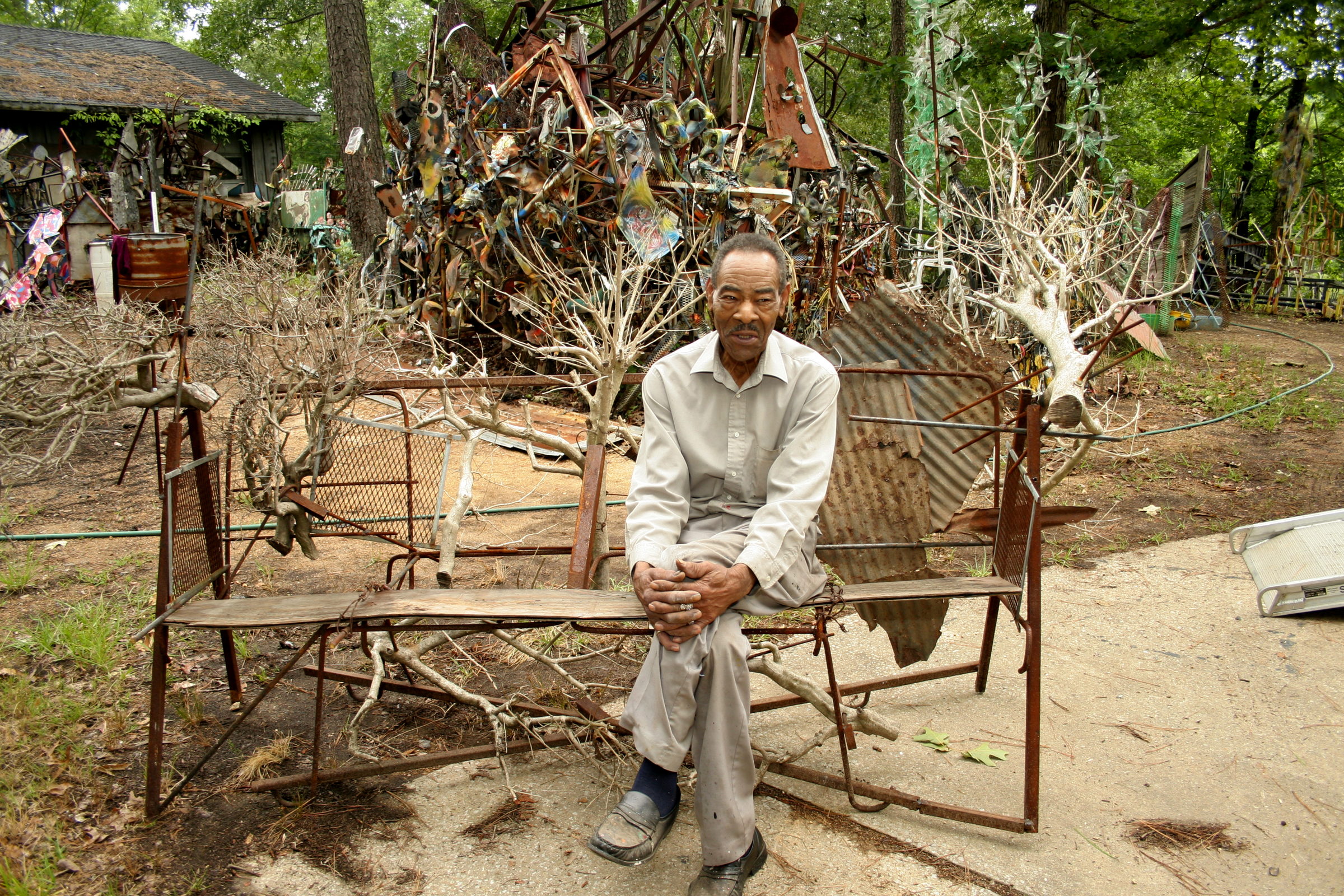
Photograph by Stephen Pitkin/Pitkin Studio
He was born on a farm in Sumter County in 1928 and left school barely able to read. For some thirty years he made steel for railcars. What he built in the yard behind his house — out of tin, rope, carpet and whatever the world had finished with — now hangs in the Metropolitan Museum of Art.
Emelle
Thornton Dial was born on 10 September 1928 in Emelle, a farming settlement in Sumter County, Alabama, to Mattie Bell, who was still a teenager. He grew up on the land and picked cotton as soon as he was big enough to be useful. There was a cousin, Buddy Jake Dial, who made things out of what lay around the yard, and a boy watching him.
CONFIRM — published sources disagree on who raised him. The Encyclopedia of Alabama says Buddy Jake Dial took him in at three; Souls Grown Deep says his great-grandmother, and aunts later. The family’s account should be the one that stands here.
Bessemer
He came to Bessemer as a boy of twelve or thirteen, to the Pipe Shop neighborhood, and school did not last. He was too big for the low grades and stopped going. What he had instead was work, and he took all of it: farmhand, ice house, cement, brickyards, foundries, pipe fitting, house painting, carpentry, monuments for graves.
For about thirty years he was a metal worker at the Pullman Standard plant, making boxcars. He learned to cut and to weld there, and he was good enough that when a hydraulic cylinder on the line kept failing, he worked out the fix himself. Nothing came back to him for it.
About two or three weeks after, all that stuff started to get did in the factory — but they never said nothing to me about it.
Thornton Dial, on the fix he gave Pullman Standard
He cut hair in his living room. He sold fishing lures. He planted a garden the neighborhood ate from.
Emelle · Bessemer · McCalla
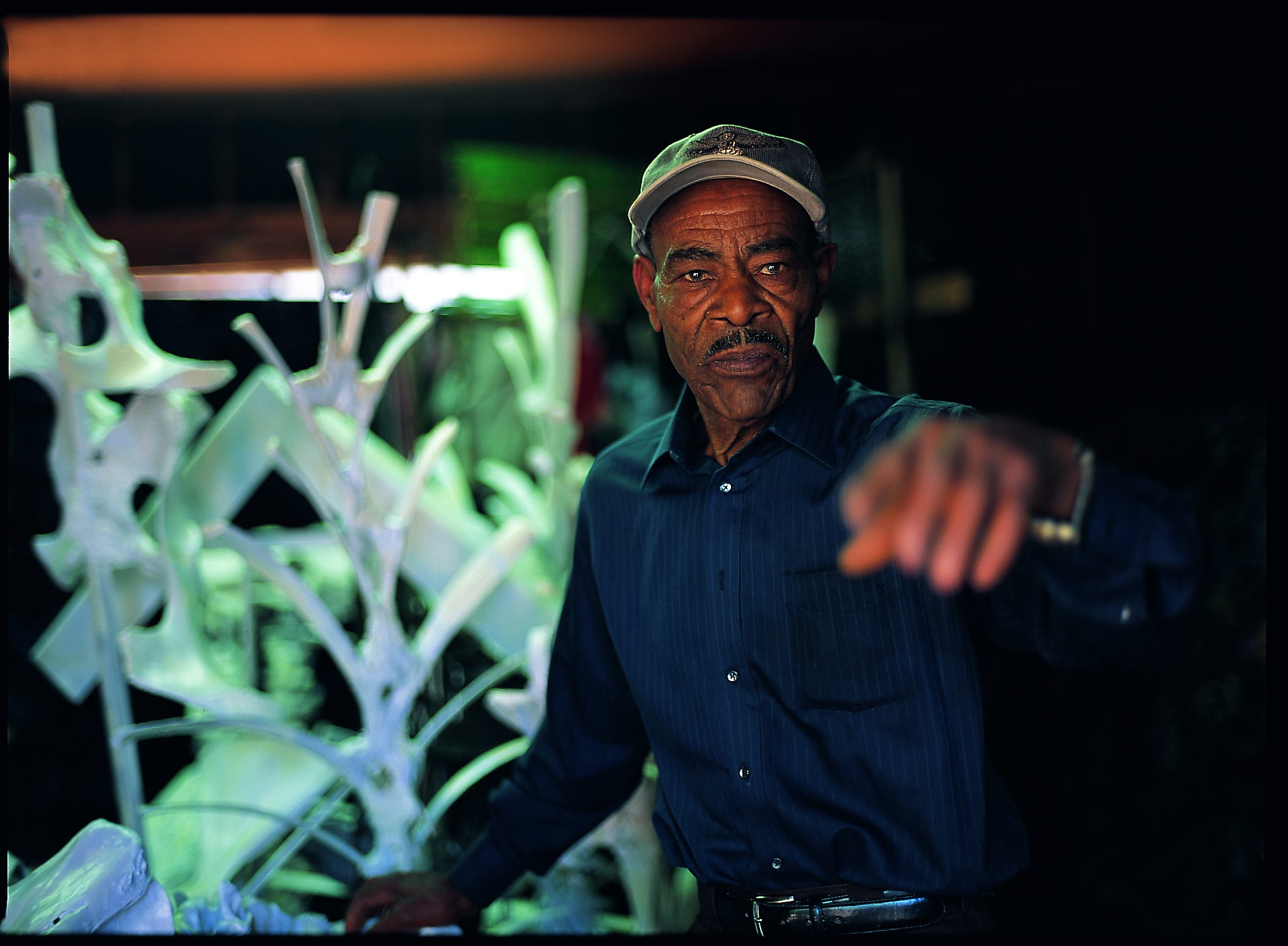
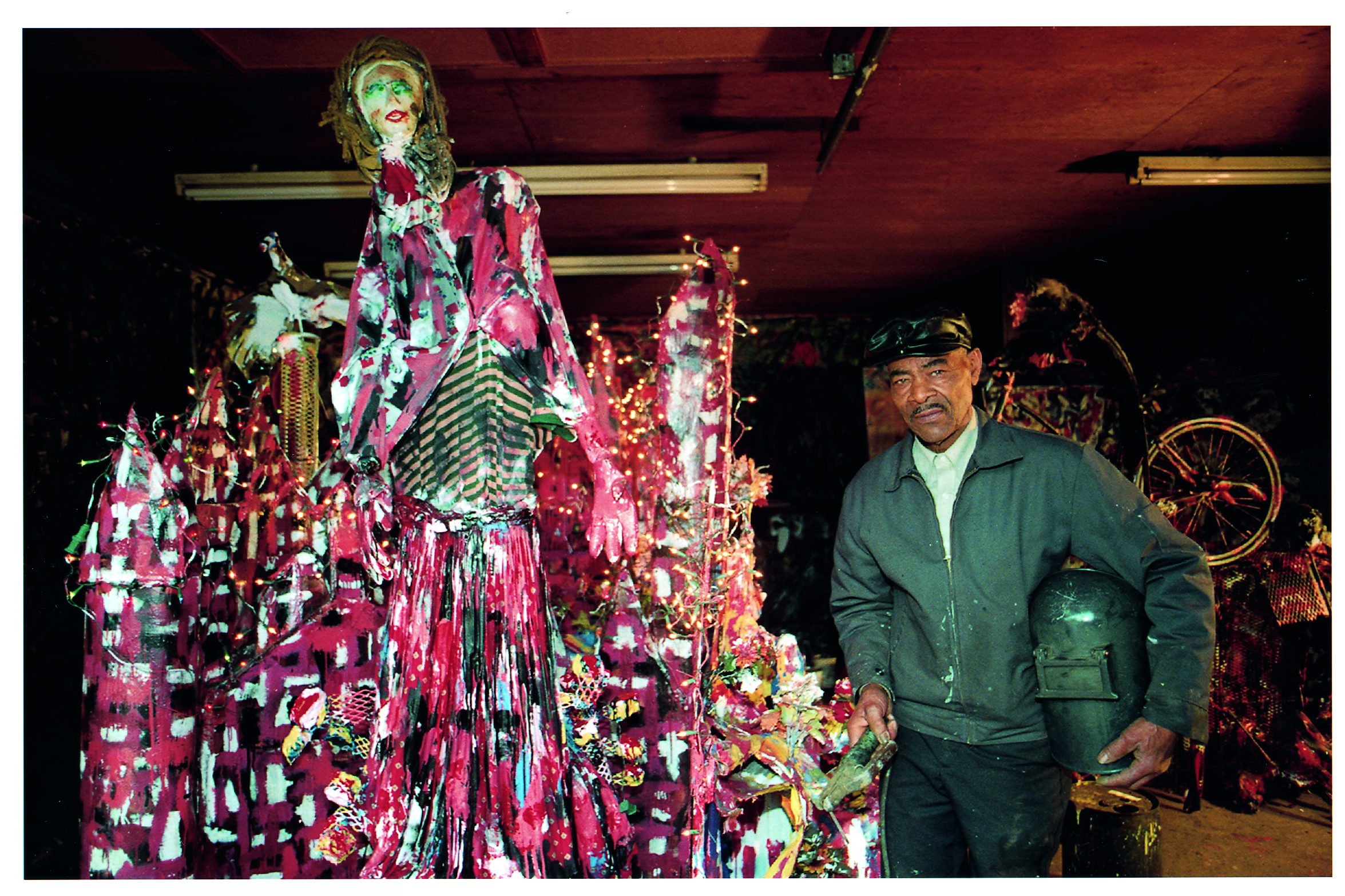
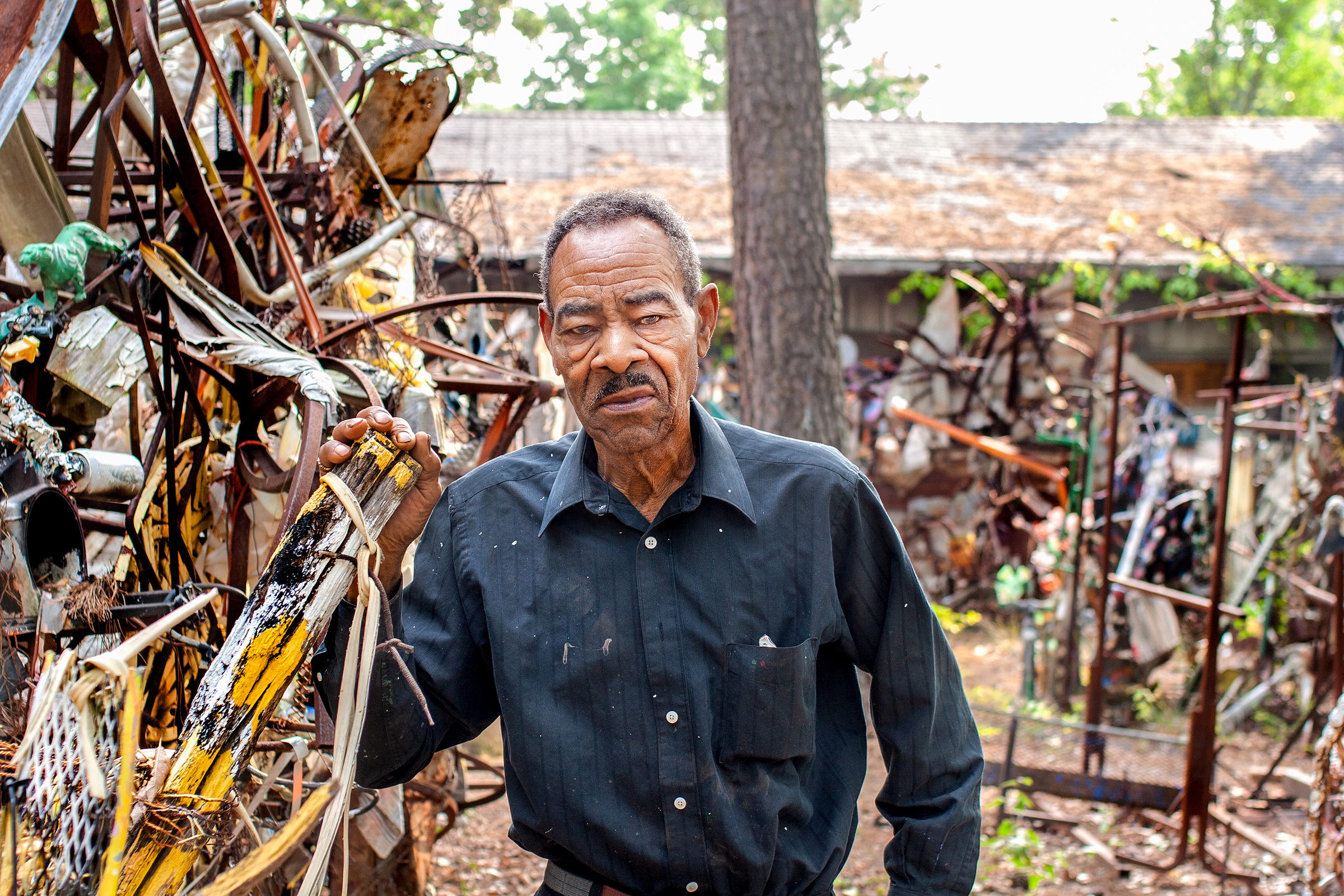
The Lures
When the Pullman work ended in the early eighties he started Dial Metal Patterns with his sons, making patio furniture, garden ornaments and fishing lures out of scrap. It was the lures that changed his life. The artist Lonnie Holley saw them, understood immediately what kind of maker had made them, and brought the collector William Arnett to the yard in Bessemer.
Dial was near sixty years old, and had been making things his whole life without anybody outside Bessemer calling it art.
The Work
He built on plywood and canvas, in tin, steel, rope, carpet, cloth, bone, roots, toys, mattress coils, chicken wire, artificial flowers, a turtle shell, a rubber glove — whatever had been used up and put down. He bound it with Splash Zone compound, a marine sealant, and painted over the top of it. The results are heavy, crowded, physical things: Trophies (Doll Factory) runs ten feet wide, Crossing Waters fourteen.
The tiger came back again and again. It was never decoration.
That tiger for me symbolized the Struggle, in the works of life.
Thornton Dial
He made more than five hundred major works, and some two thousand drawings and watercolours on paper.
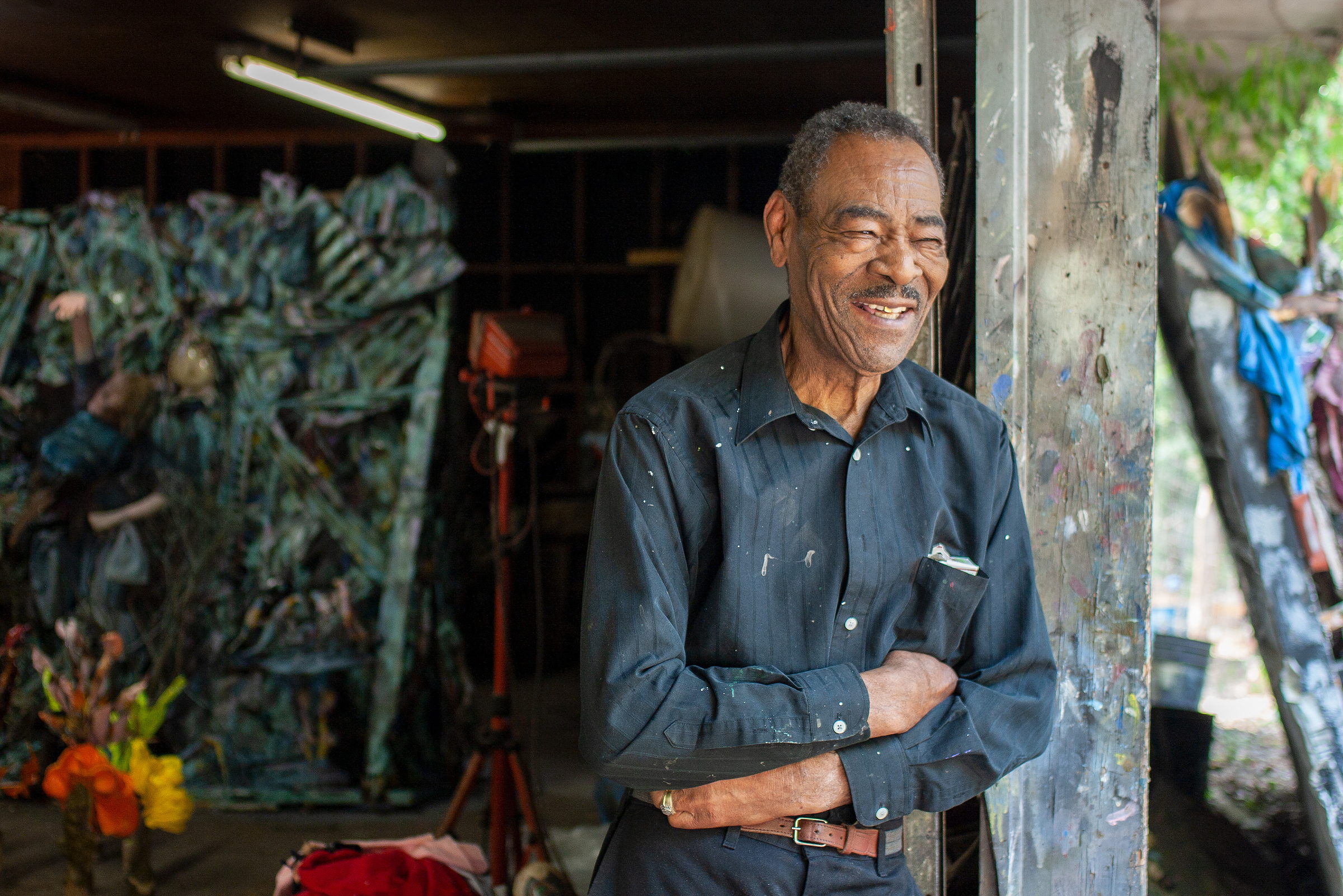
Photograph by Jerry Siegel
Recognition
In 1993 two New York museums opened Thornton Dial exhibitions on the same day — the New Museum of Contemporary Art and the Museum of American Folk Art. He was in the Whitney Biennial in 2000. In 2011 Hard Truths: The Art of Thornton Dial opened at the Indianapolis Museum of Art and travelled to Atlanta, New Orleans and Charlotte. His work entered the Metropolitan Museum of Art, the Whitney, the Museum of Modern Art, the High, the Smithsonian and twenty-two public collections in all.
He was called an outsider for most of it, a word his admirers spent years arguing with on his behalf. He kept working. He died at home in McCalla on 25 January 2016, aged eighty-seven.
The company he kept
He Was Not Working Alone
The work is about Black life in the American South, and so were the people in it. He knew them, and they knew what he was making.
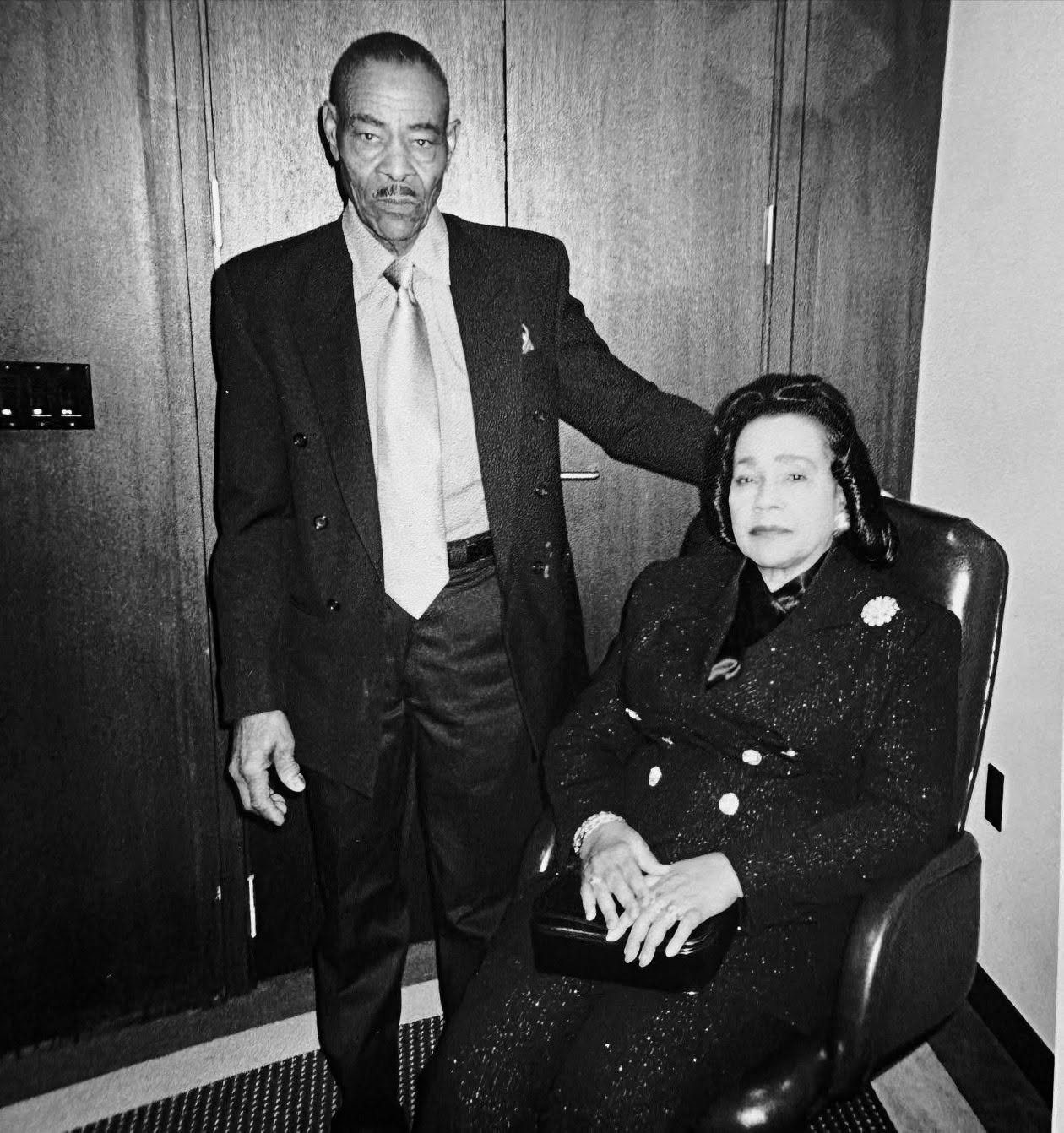
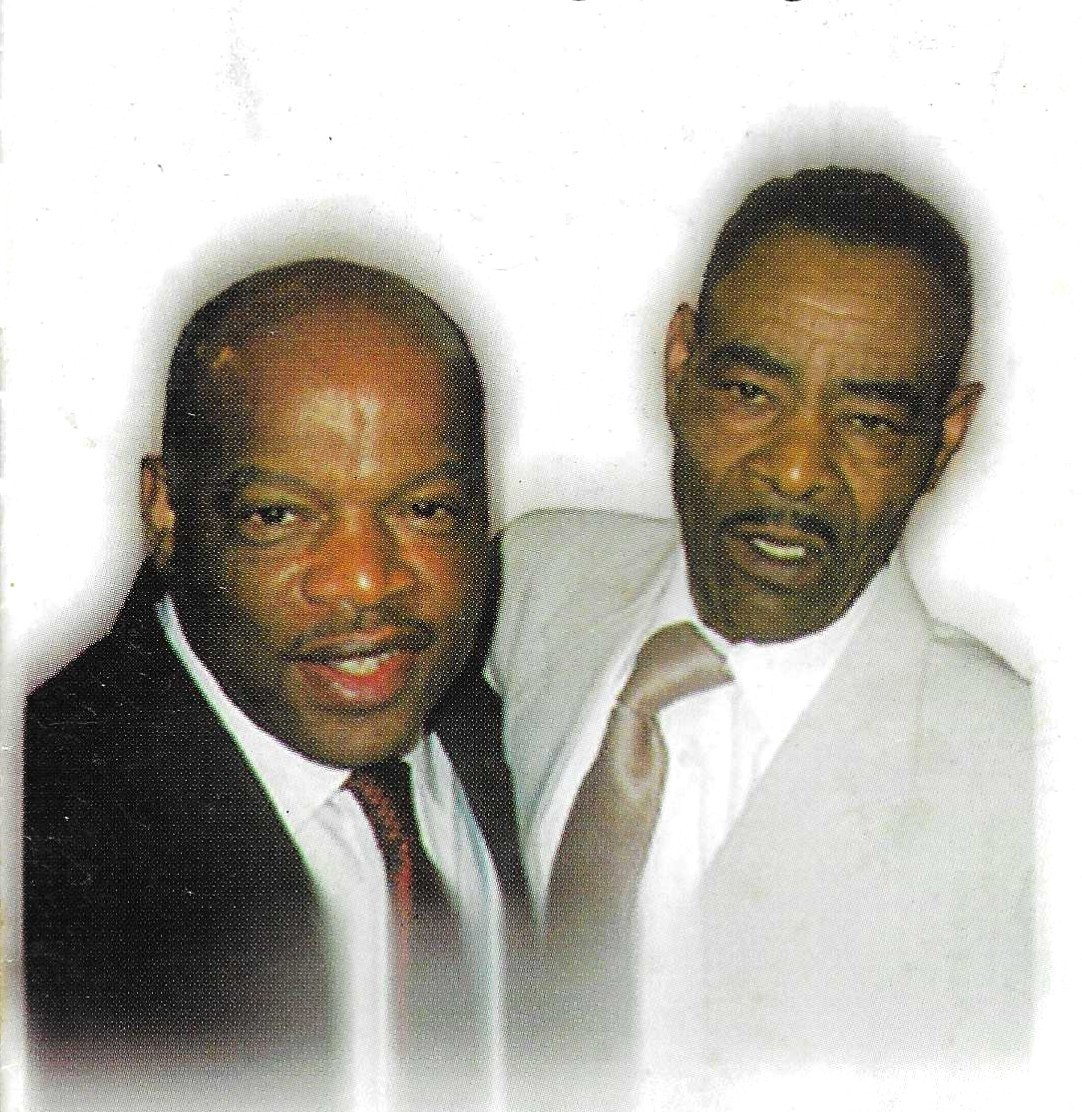
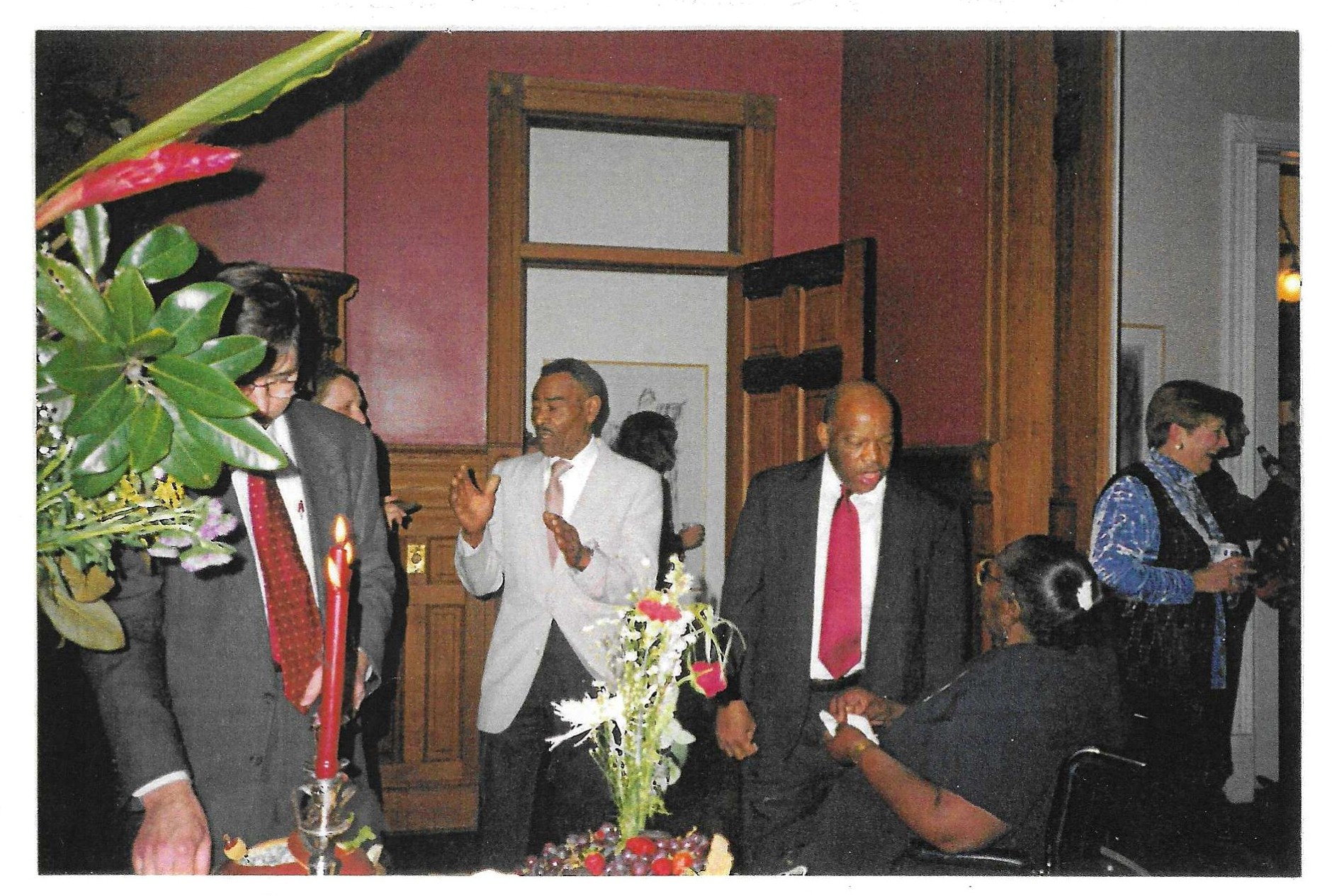
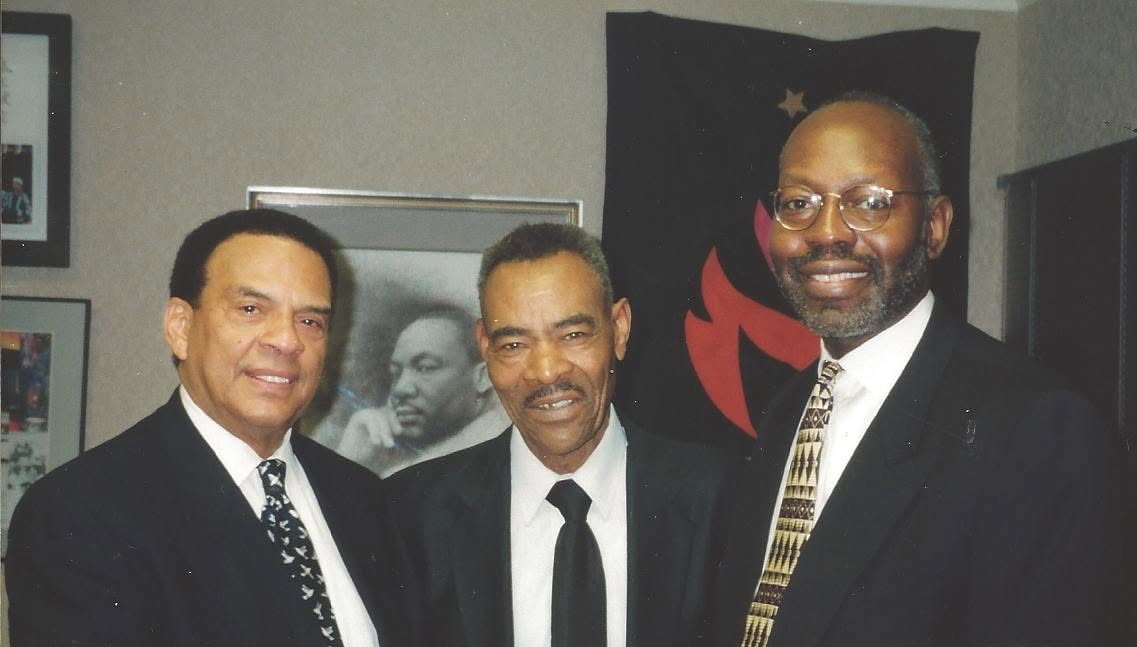
Caption each one with the names and the year. These are the family’s own photographs, so the credit line is Courtesy of the Dial family.
Courtesy of the Dial family
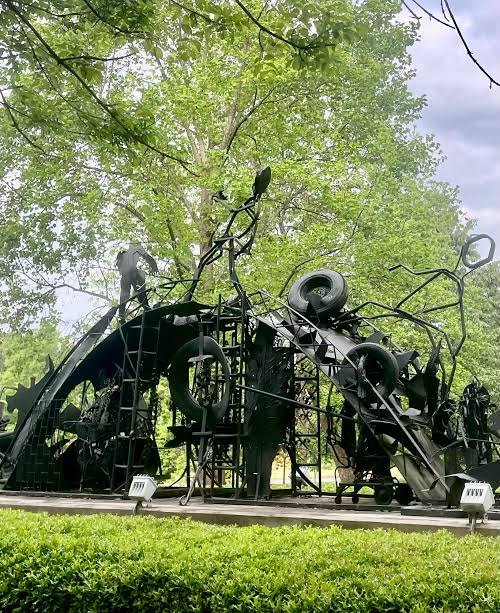
Atlanta, Freedom Park
The Bridge
His steel sculpture of 1997, at John Lewis Plaza where Freedom Parkway meets Ponce de Leon. It honours Lewis’s lifelong work for civil and human rights, and the neighbourhoods that fought to stop the highway that would have run through them. It is the only work of his that stands outdoors, in public, for anybody to walk up to.
PHOTOGRAPHER CREDIT NEEDED — ask before this one is published.