The Art
Assemblage, sculpture, and works on paper — tin, steel, rope, carpet, bone, roots, paint, watercolour and found material. Five decades of work, arranged to show how it changed.
ADD ARTWORK HERE — select the gallery below and upload. Caption each one Title, Year, Medium. Write real alt text describing the work, not just its title: that is how the estate surfaces in image search. Still to add: works-on-paper-one.jpg
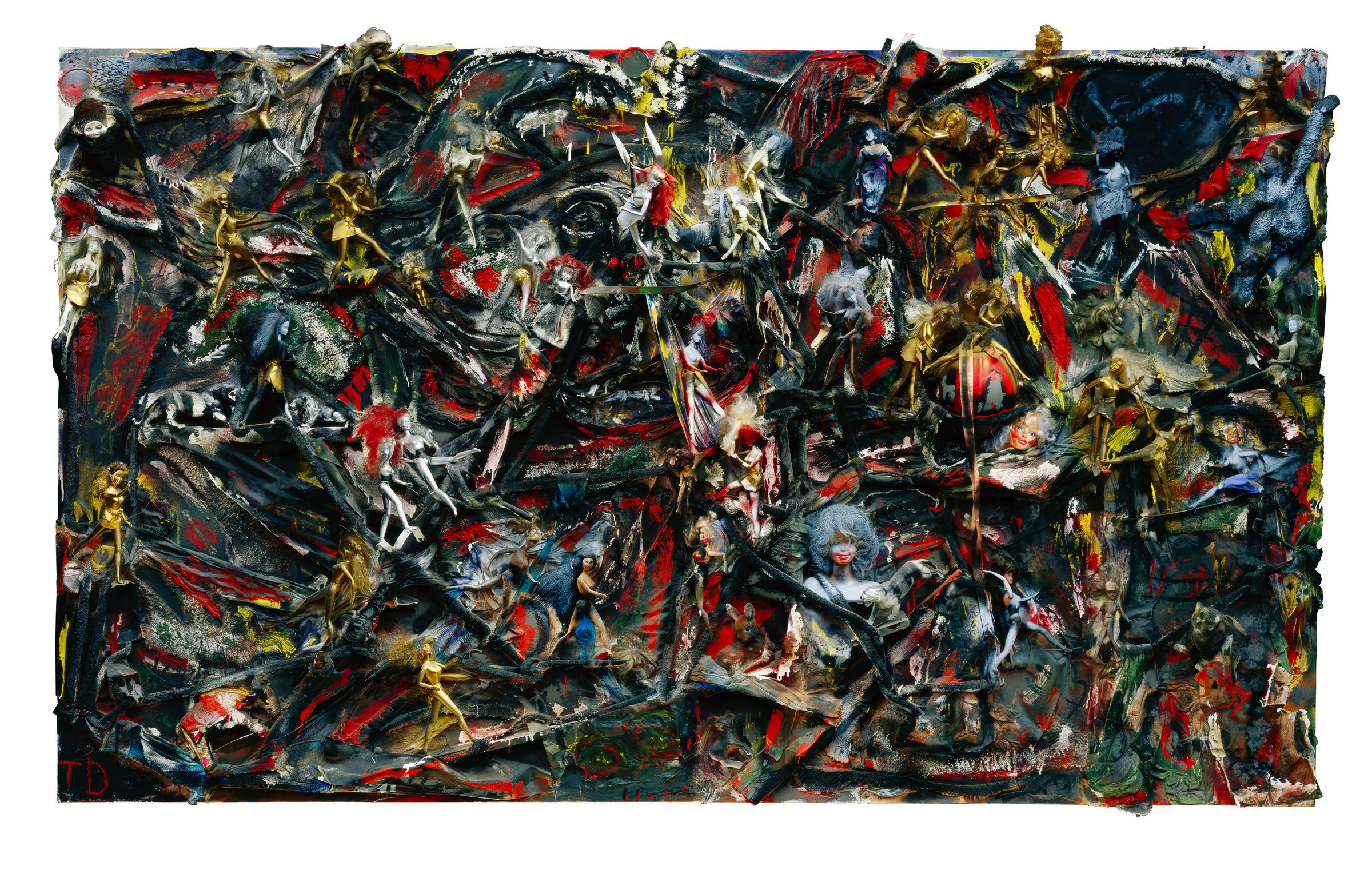
2000
Barbie dolls, stuffed animals, plastic toys, cloth, tin, wood, rope carpet, Splash Zone compound, oil, enamel and spray paint on canvas on wood
75 × 123 × 18 in
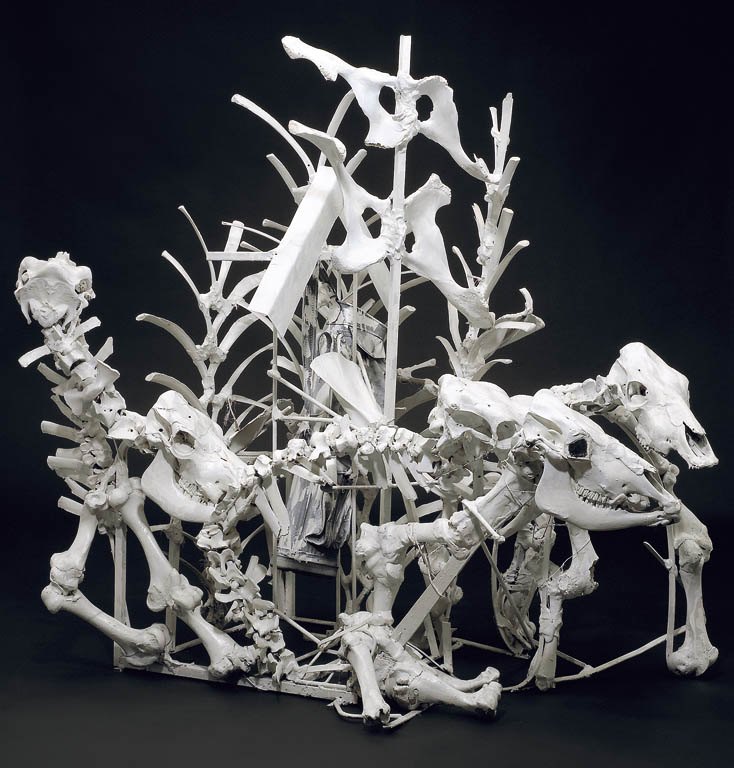
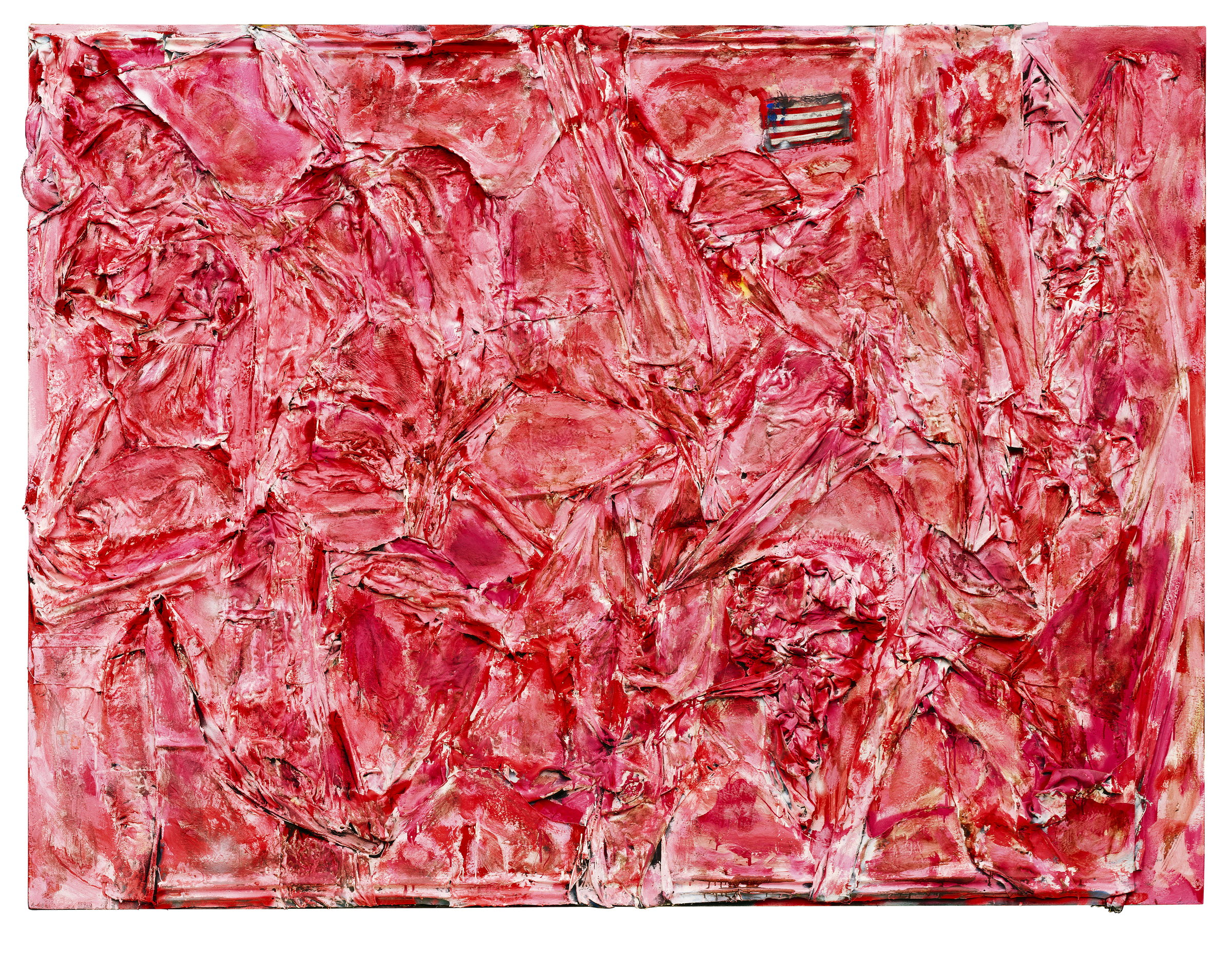
2003
Tin, cloth, enamel and spray paint on canvas on wood
72.5 × 97.5 × 5.5 in
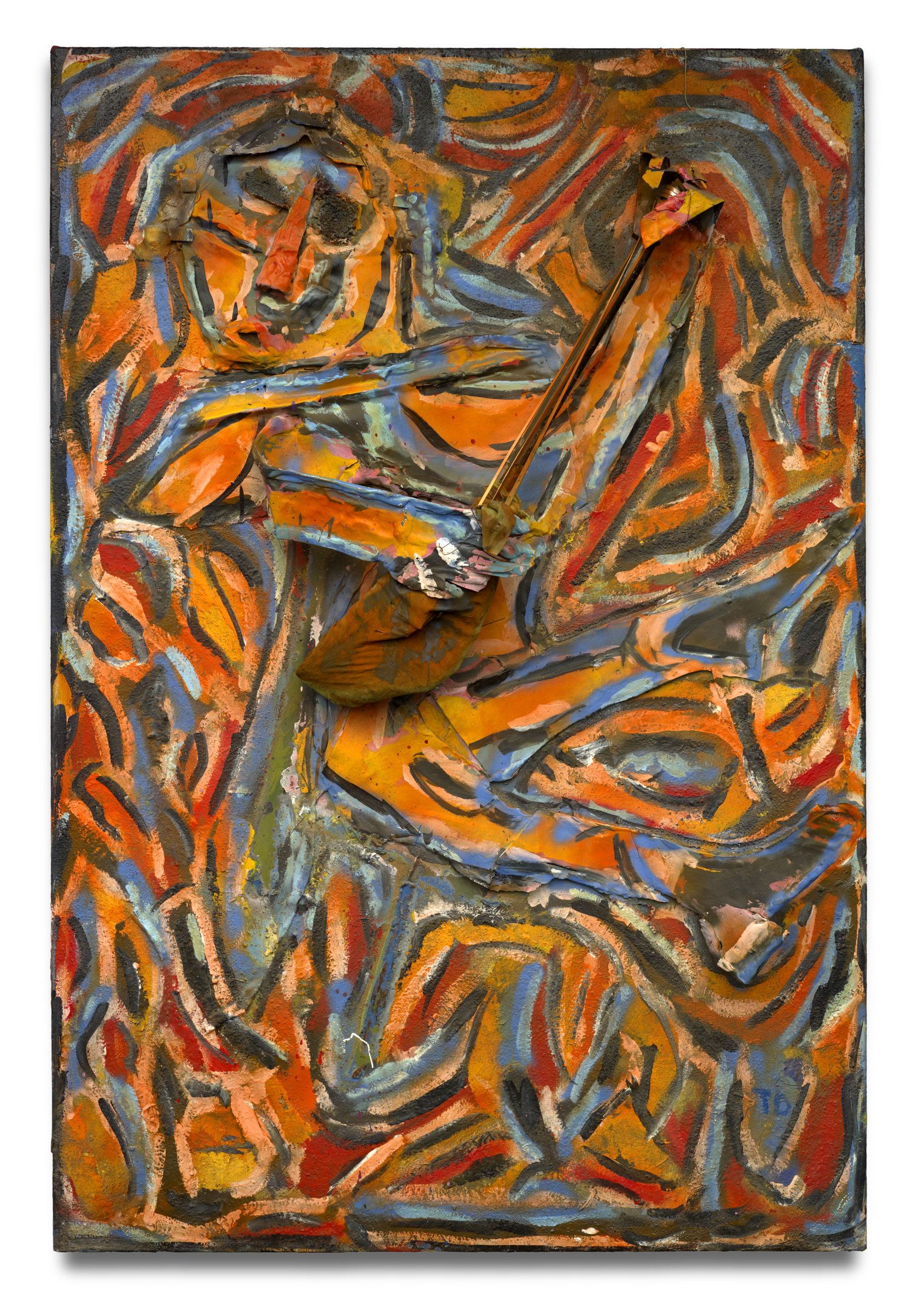
1994
Metal, enamel and spray paint on canvas on wood
72 × 48 in
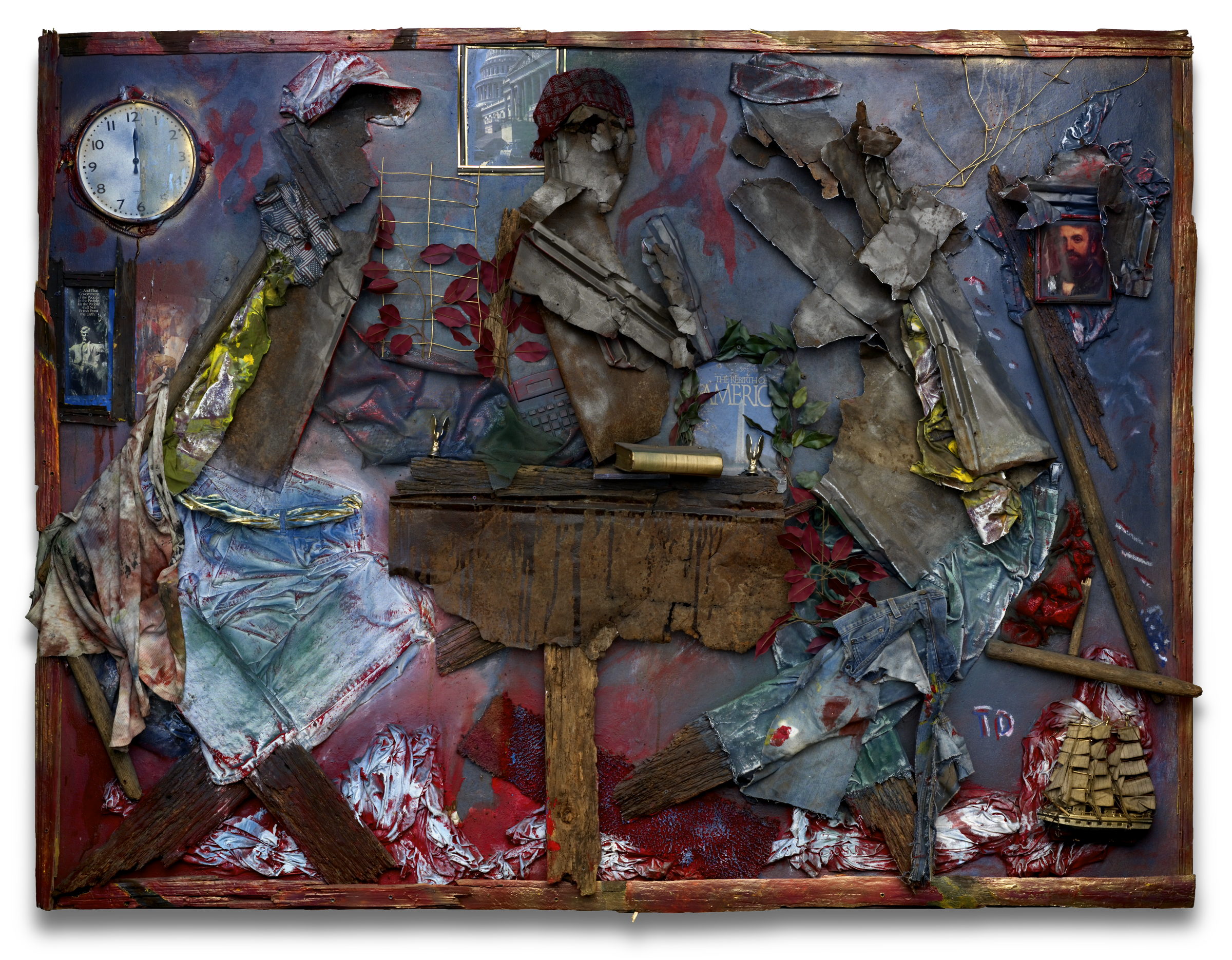
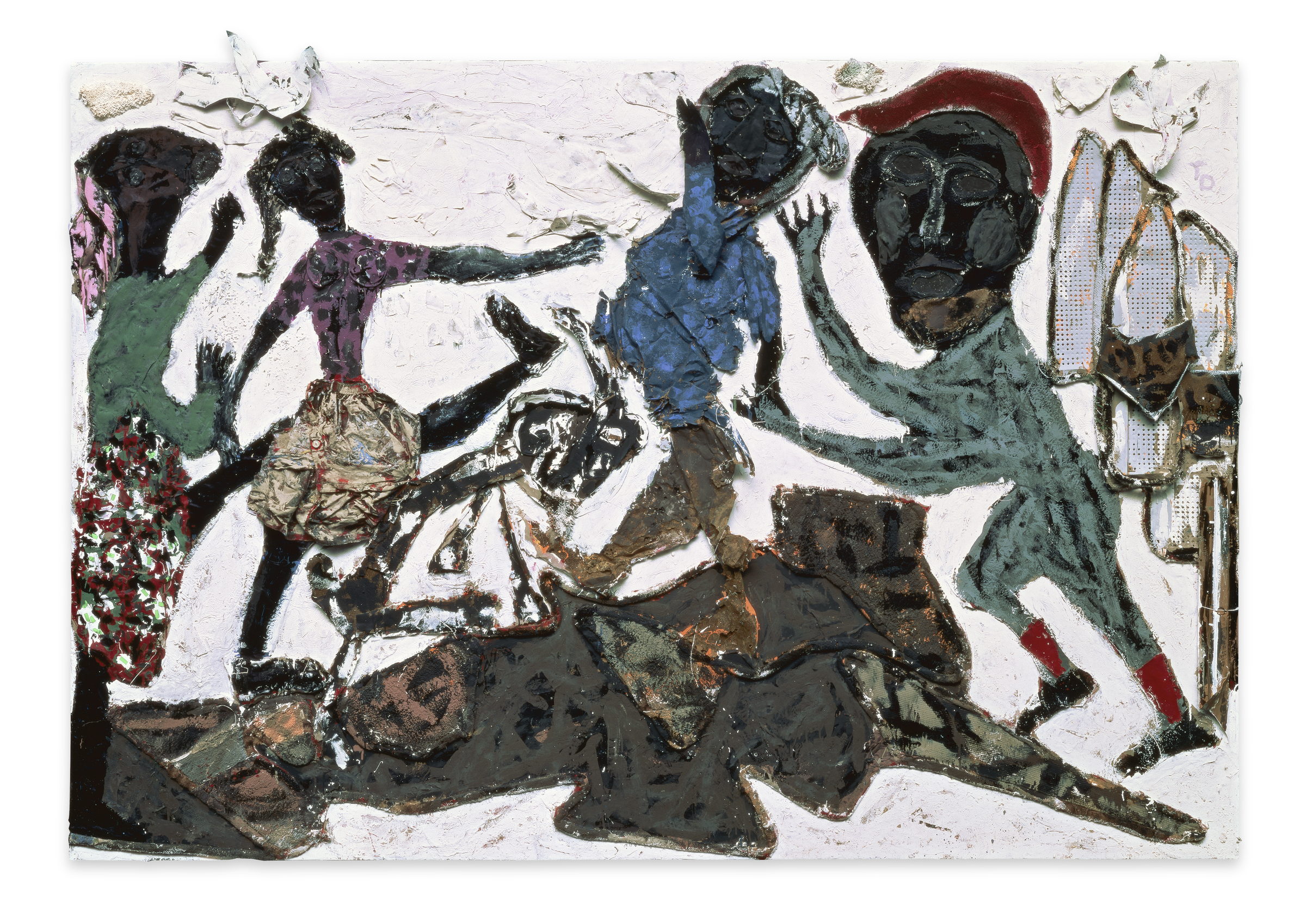
1992
Tin, rope carpet, cloth, vinyl, carpet, wire screen, feed sacks, enamel and Splash Zone compound on canvas on wood
85.5 × 121 × 3.5 in
Photograph by Gamma One Conversions
Assemblage · 1992
Remembering the Road
Five figures walk left to right across a white ground, cut from cloth and painted dark. One throws an arm out across the picture, one raises a hand, and the one at the right carries a load of metal grating on his back. Under them runs a low band of brown and grey scraps, worn flat, which is the road itself.
The road is one of Mr. Dial’s long subjects. He was born in Emelle, in the Black Belt, and left it for Bessemer and thirty years of building railcars at Pullman Standard — the same road out of the rural South that millions of Black Americans took in the Great Migration. The figures here are not arriving anywhere. They are still walking.
What they are made of is the argument. Tin, rope carpet, feed sacks, wire screen and vinyl — the materials of farm work and factory work, the things that pass through the hands of the people in the picture. The binder holding it together is Splash Zone compound, a marine epoxy meant for patching ships below the waterline: a repair material, used to make something that lasts.
It hangs three and a half inches off the wall. That depth is not incidental — the figures stand out from their ground and cast their own shadows, so the work is closer to a relief than a painting, and the walking reads as something happening in front of you rather than behind glass.
The Michael C. Carlos Museum at Emory University took this work’s title for his 1996 solo exhibition, Thornton Dial: Remembering The Road.
Smithsonian American Art Museum
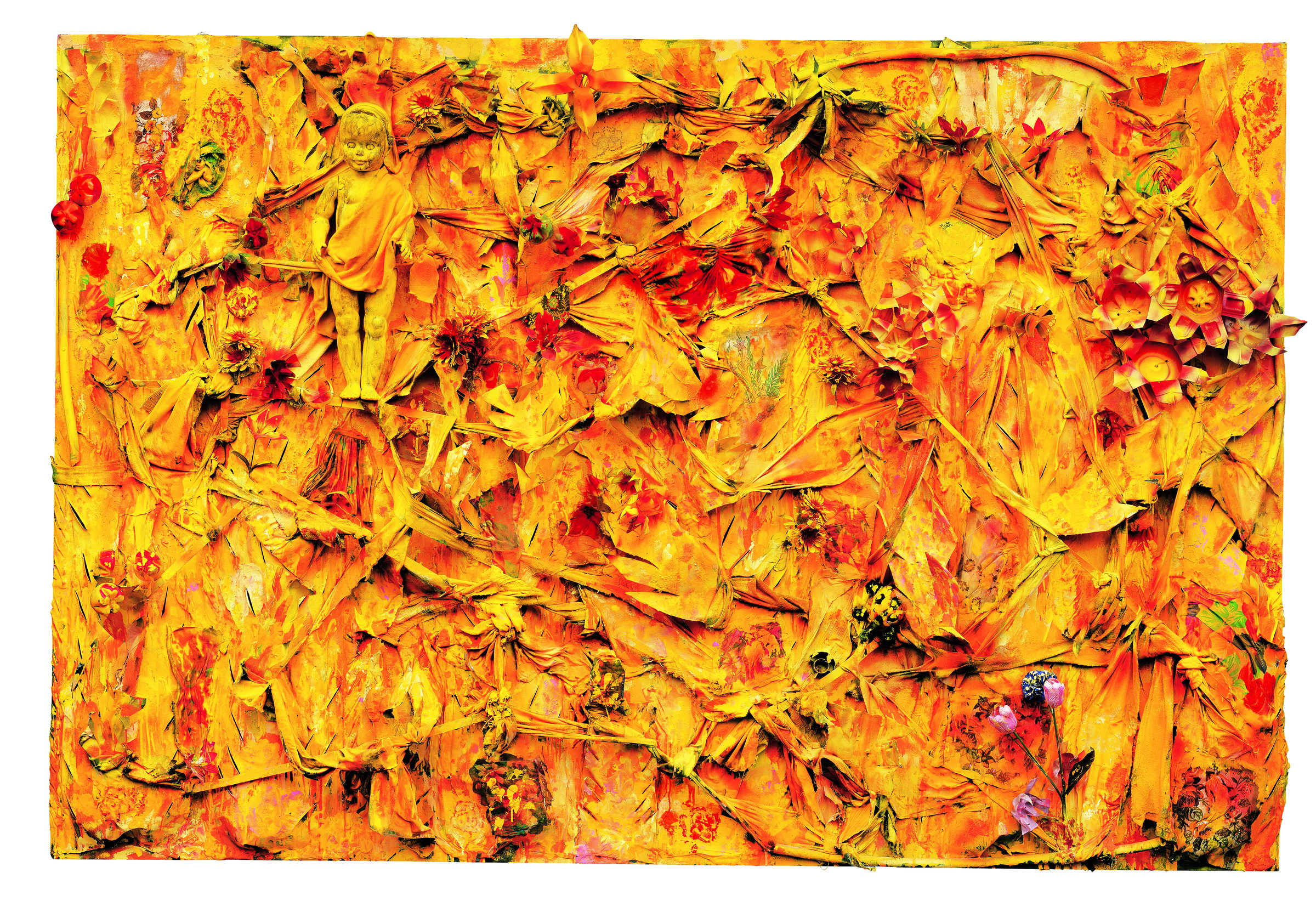
The Beginning of Life in the Yellow Jungle
Plastic soda bottles, a doll, bedding, wire, a rubber glove, a turtle shell and artificial flowers, seventy-five by a hundred and twelve inches. Given the full width of the screen, because at any smaller size the materials disappear.
Photograph by Stephen Pitkin/Pitkin Studio
Reproduction rights in Thornton Dial’s artwork may be administered by Artists Rights Society (ARS). Contact the Estate for licensing inquiries.