Mr. Dial
The man, the studio, and the yard at McCalla.
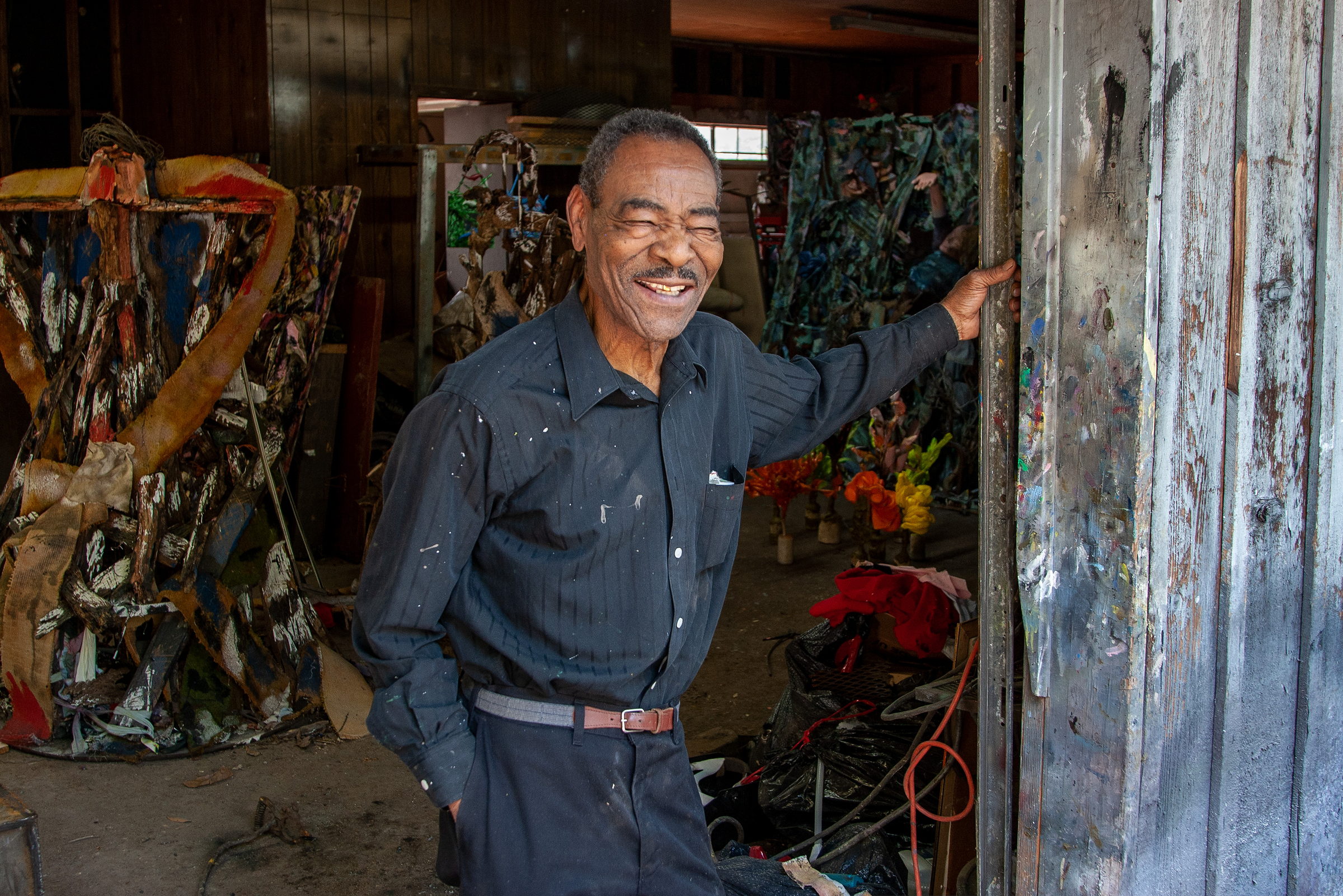
Photograph by Jerry Siegel
In the family’s words
A Grandchild of Thornton Dial
Growing up we always knew that Grandaddy was special.
His hospitality and handshakes were always stretched toward a stranger. As a grandfather he had a gentle demeanor that groomed us to love one another as family, give respect to others, and to give thanks to God for everything. Every concrete conversation with him was accompanied by his charismatic character. He would often lock eyes with us, giving us long lectures about surviving the challenging lessons of life. The experiences we exercise within our kinship are more memorable and meaningful because of him. For that we will forever adore him in all his ways.
His hospitality and handshakes were always stretched toward a stranger.
Brandon Dial · Grandson
Being continuously creative in his craft he became self-evolving in his techniques to contribute more complex concepts through sculptures, paper and canvases about Black American culture. Over time we witness his iron-willed work ethic becoming the subject of wonders in the art world. As an artist, his legacy and influence are still leaning in the minds of those who will listen to his story. His internationally recognized talent remains a divine delivery from God. As a Grandchild of Thornton Dial we are grateful to have had him as our Grandaddy.
Brandon Dial
Grandson of Thornton Dial
In the family’s words
My Grandfather, Thornton Dial
My grandfather was an amazing man—not because he became an internationally renowned artist, but because of the kind of man he was long before the world knew his name.
He led with love, compassion, strength, and faith as he cared for his family and community. He fed people from his garden, gave haircuts to children whose parents could not afford them, and shared what he had even when he did not have much himself. Poverty was never his identity, and struggle was never his legacy. His legacy was family, love, faith, sacrifice, and perseverance. Although he lived through segregation and Jim Crow, he did not allow bitterness to break his spirit. Instead, those experiences flowed through his art, allowing his paintings to speak of struggle, survival, history, injustice, strength, and perseverance.
Poverty was never his identity, and struggle was never his legacy.
Chanessa Dial · Granddaughter
But for me, his greatness was much simpler. It was his smile, his laughter that could light up a room, and the way he reminded us that everything he did was for his family. Most of all, I remember the way he prayed over us when we gathered around the dinner table. I could hear and feel how deeply he pleaded with God on behalf of his family. His prayers carried his love, his faith, his hopes, and his desire for God to protect, guide, and keep us. The world may remember Thornton Dial as a great artist, but I will always remember the loving, faithful, compassionate man I was blessed to call my grandfather.
Chanessa Dial
Granddaughter of Thornton Dial
Portraits
Every photograph is credited to the photographer who made it, and cleared before it is published.
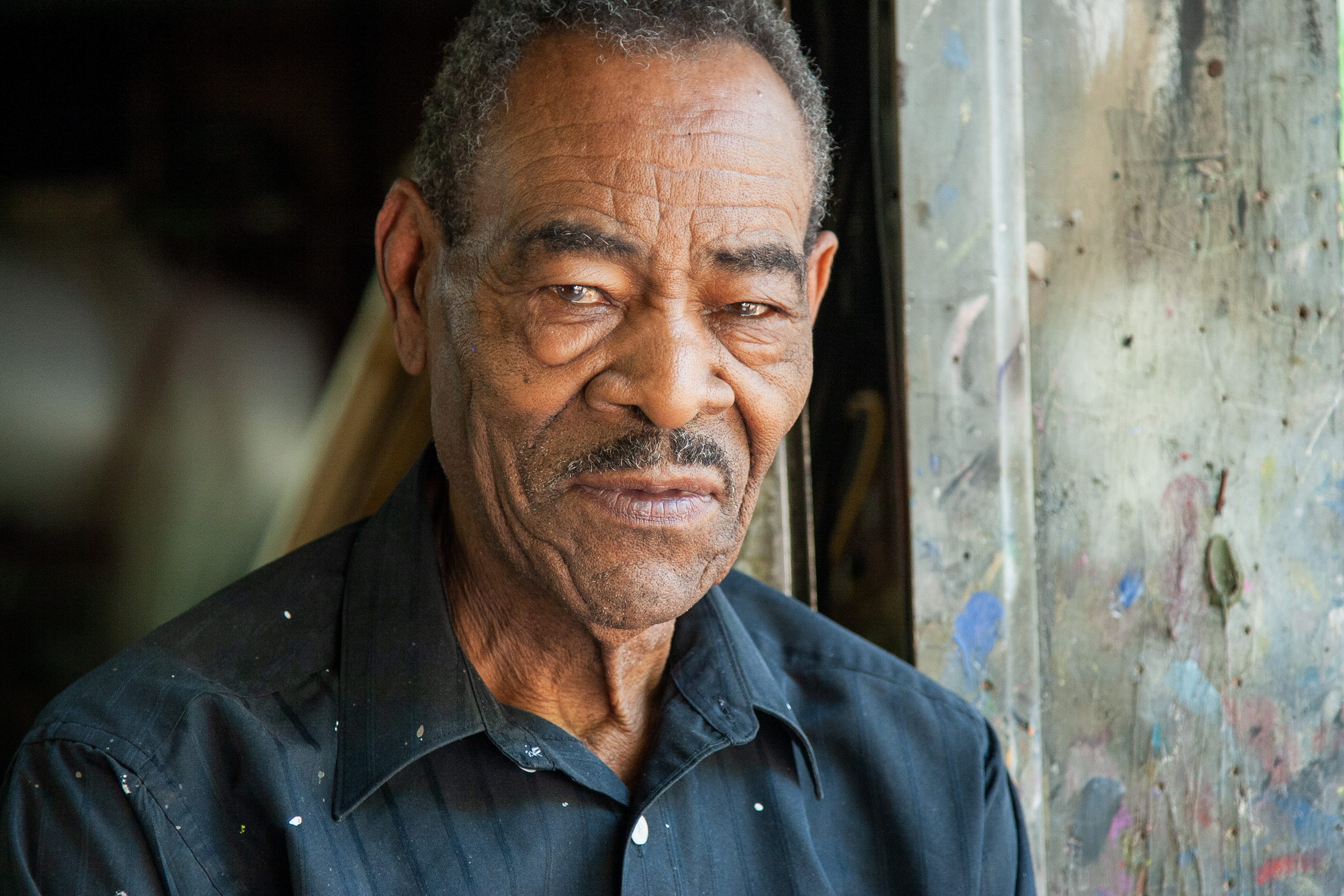
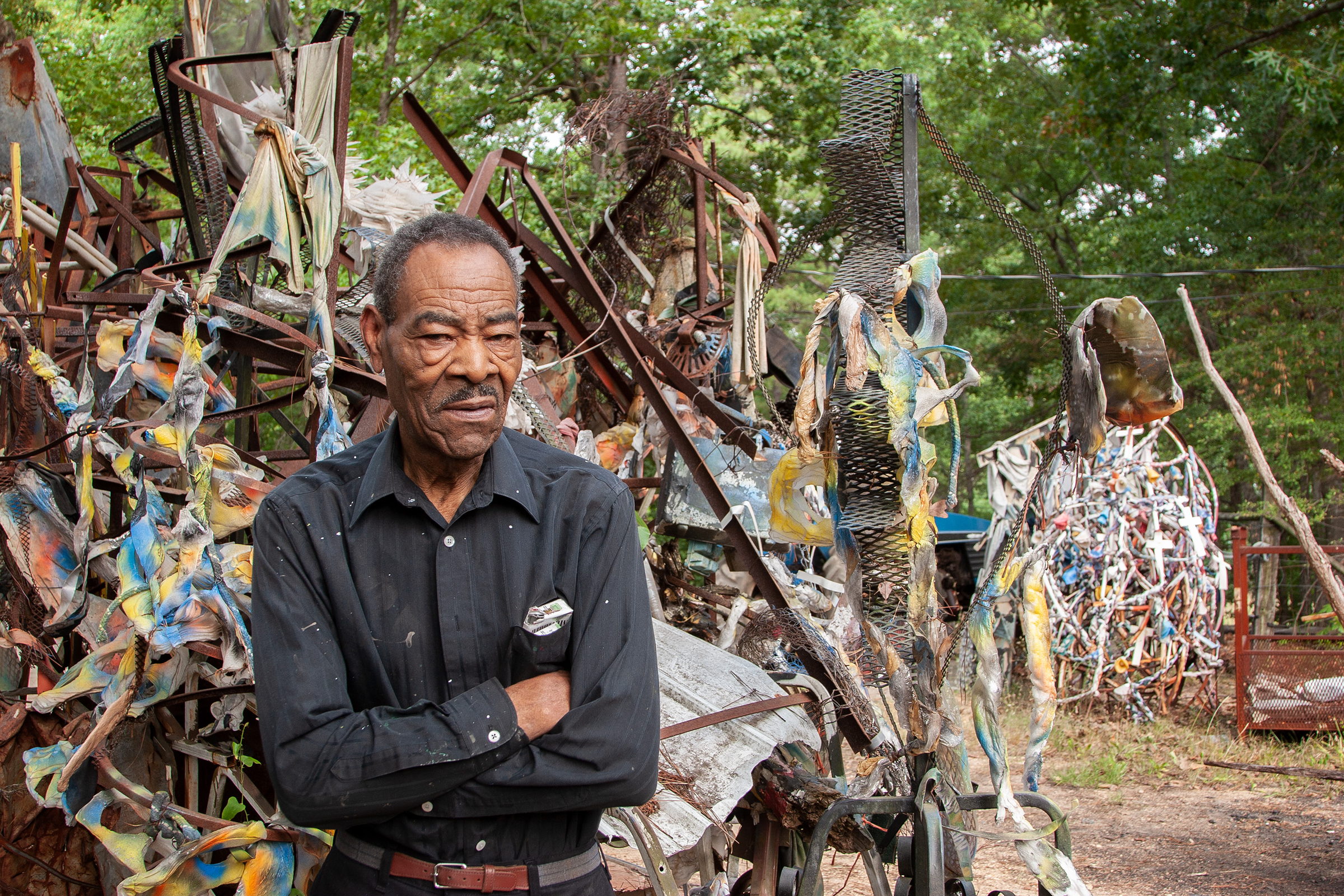
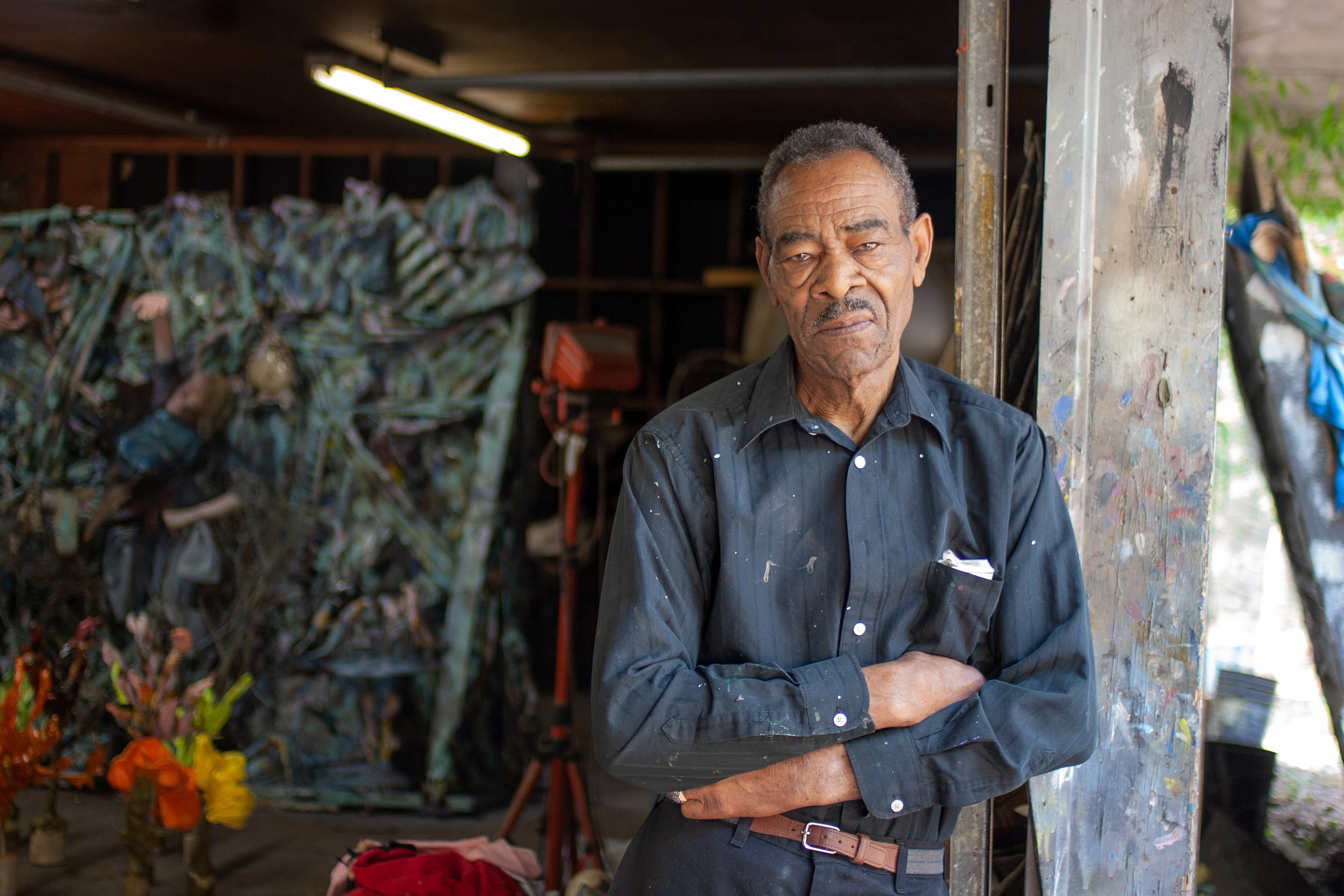
Photograph by Jerry Siegel
Where the Art Was Created
The shop behind the house in Bessemer. He built flat on trestles, sprayed everything one colour at the end, and stood the finished work against the wall until somebody came for it.
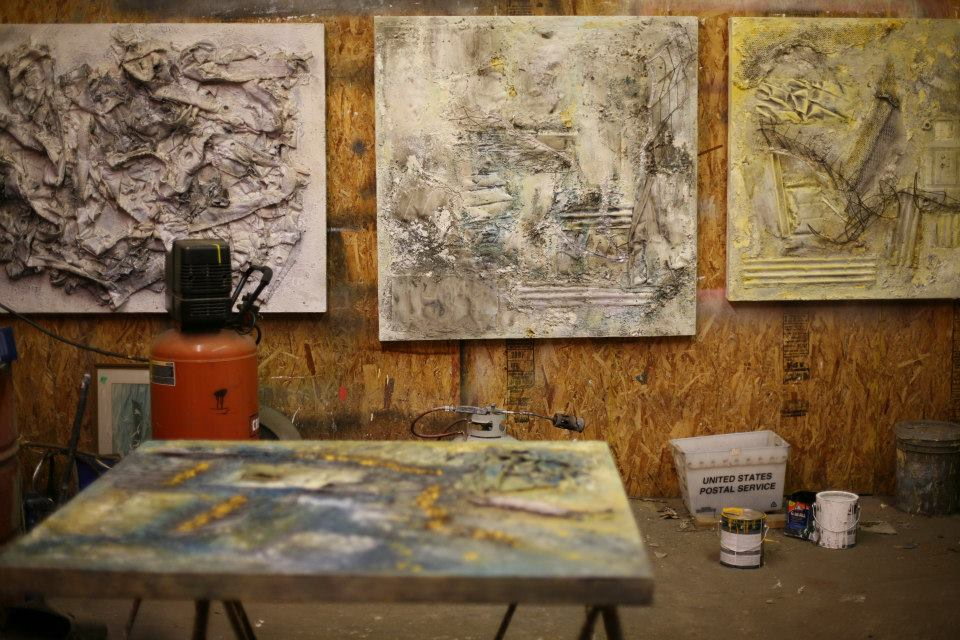
Three works in progress above the compressor he sprayed with, and a fourth flat on the trestles in front
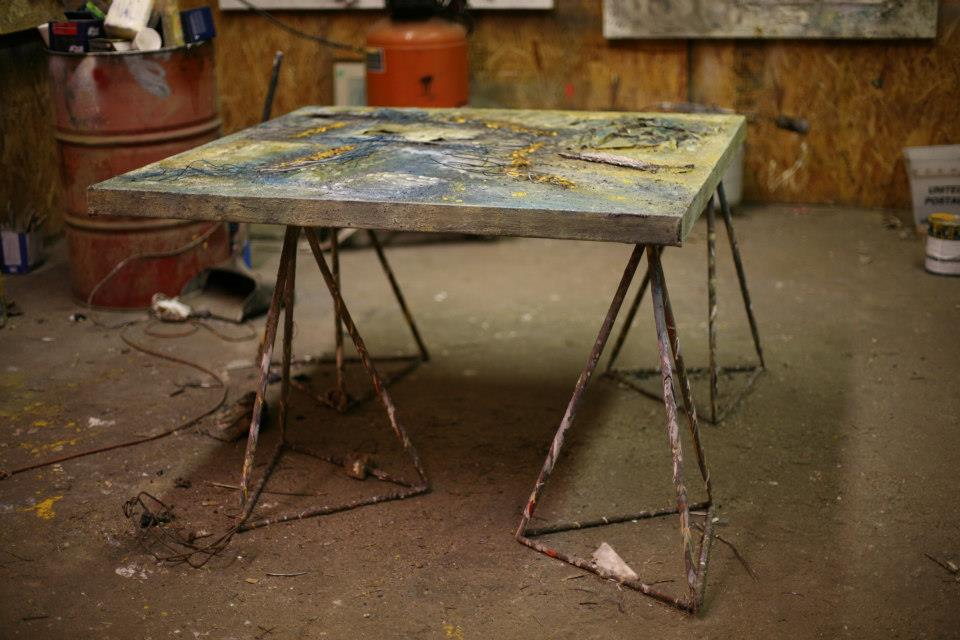
A panel built flat on welded metal legs, material still loose on its surface
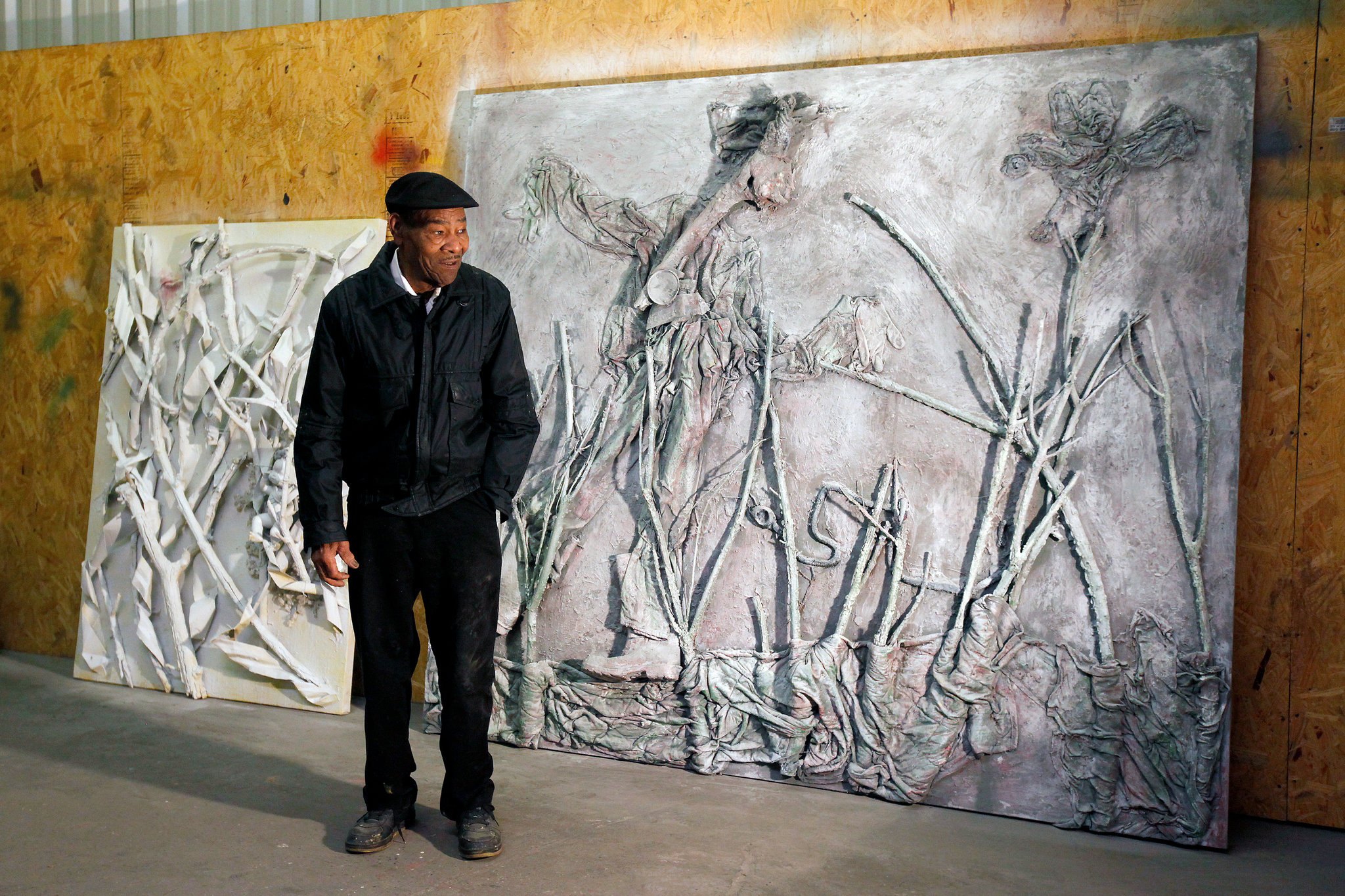
Two of the large pale works, in the shed at McCalla
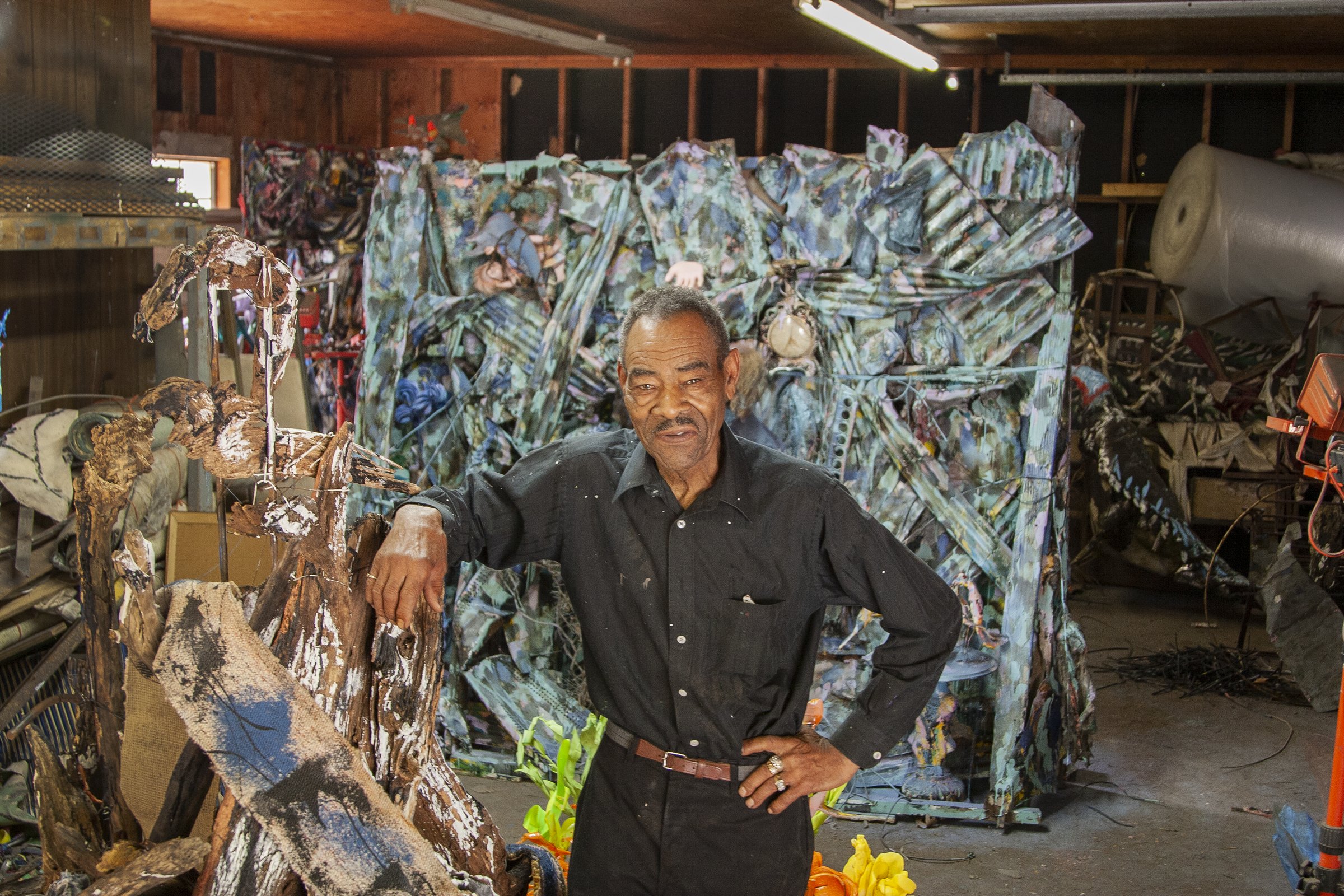
Bessemer
Where the Art Was Created
He worked thirty years at the Pullman Standard plant in Bessemer, building railcars, and made his own work in the hours around it — first in the shop behind the house, later across the yard at McCalla, where finished pieces stood out in the weather until somebody came for them. Almost everything in the museums now was assembled in one of those two places.
Photograph by Jerry Siegel